
Views: 0 Author: Site Editor Publish Time: 2026-02-02 Origin: Site


Healthcare imaging is built on a wide spectrum of optical technologies rather than a single device or component, and Medical Optics Types represent the foundation that allows hospitals, laboratories, and surgical centers to operate with accuracy and confidence. Rising EO, an optical technology enterprise with strong engineering capabilities and international quality certifications, continuously develops diversified medical optical products that meet the evolving requirements of modern healthcare institutions. Understanding how different optical systems function and where they are applied helps medical equipment buyers, distributors, and technical professionals make more informed decisions, improve equipment performance, and ultimately strengthen clinical efficiency.
Medical optics can first be understood through its practical usage environment. Each medical scenario demands unique optical performance characteristics, mechanical structures, and compatibility considerations. Rising EO designs its product portfolio with these field-specific requirements in mind, ensuring that healthcare providers and equipment manufacturers can find suitable solutions across various medical disciplines.
Diagnostic optics focuses on early detection, observation, and screening procedures. Devices used in this field prioritize resolution, brightness, and color accuracy to reveal subtle biological changes. High-quality endoscope lenses and compact imaging modules allow physicians to identify abnormalities in tissues, organs, and vascular structures at earlier stages. Rising EO integrates precision lens polishing and anti-reflection coatings to ensure that diagnostic equipment delivers consistent visual clarity, reducing uncertainty and improving detection accuracy.
Diagnostic optics also contributes to non-invasive medical examinations, which enhance patient comfort and reduce procedure risks. Optical reliability in this area is essential because early diagnosis often determines the success of treatment strategies.
Surgical optics is designed to support real-time visualization during medical procedures. Surgeons depend on stable and distortion-free imaging to guide instruments and perform delicate operations. Optical performance directly influences surgical precision, operation time, and procedural safety.
Rising EO provides rigid endoscopes and 3D endoscopic systems that enable depth perception and accurate spatial awareness. These features are particularly important in minimally invasive surgeries where visibility through small incisions must remain uncompromised. The durability of surgical optical devices is equally important, as they must endure repeated sterilization and mechanical handling without losing performance.
Laboratory optics plays a critical role in medical research, biological observation, and analytical testing. Optical instruments used in laboratories require extreme precision and stability because they often deal with microscopic structures and sensitive experimental data. Rising EO designs optical components with corrosion-resistant materials and advanced coatings that support long-term laboratory usage. These solutions help research institutions maintain reliable imaging conditions while minimizing maintenance frequency and operational costs.
Laboratory optics also supports medical education and training. Accurate visualization allows students and professionals to observe biological processes in detail, contributing to the advancement of medical knowledge and technological development.
Endoscopic optical systems form one of the most widely recognized categories within medical optics. These systems allow internal visualization of the human body without the need for large surgical openings, improving patient comfort and recovery speed.
Rigid endoscopes provide structural stability and precise image transmission. Their solid construction prevents vibration and maintains consistent focus, making them suitable for surgical and diagnostic applications where steadiness is essential. Rising EO manufactures rigid endoscopes with ergonomic designs and high-quality optical assemblies, enabling healthcare professionals to operate with confidence during extended procedures. The combination of clarity and durability ensures that rigid endoscopes remain dependable even after repeated sterilization cycles.
Three-dimensional endoscopes represent a significant evolution in visualization technology. By introducing depth perception, these systems allow surgeons to judge distances and spatial relationships more accurately. Enhanced depth awareness reduces operational risk and increases procedural efficiency. Rising EO integrates advanced optical calibration and imaging alignment technologies into its 3D endoscope solutions, helping medical teams achieve clearer visualization in complex surgical environments.
Endoscope couplers serve as the connection interface between optical systems and imaging equipment. A well-designed coupler ensures stable signal transmission, compatibility, and minimal image distortion. Rising EO provides customized coupler solutions tailored to various device configurations, allowing seamless integration and reliable performance. Couplers may appear small in structure, but their role in maintaining system stability and imaging clarity is highly significant.
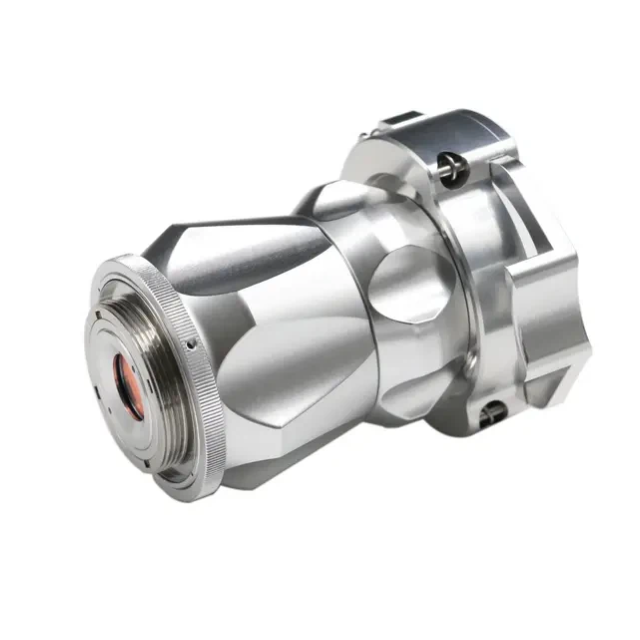
Optical lens systems are essential components embedded in a wide range of medical devices. Their performance influences image resolution, brightness uniformity, and distortion control. High-quality lenses enable accurate visualization of anatomical structures and enhance overall imaging reliability.
Clarity is the primary expectation of medical lenses. Rising EO applies multi-layer coating technologies to increase light transmission and reduce glare, ensuring that imaging devices deliver consistent brightness and contrast. These features help physicians detect fine details that may otherwise remain hidden.
Material resistance is equally important. Medical environments often involve exposure to disinfectants, moisture, and temperature variations. Corrosion-resistant materials and protective coatings extend the lifespan of optical lenses and maintain performance stability. Rising EO prioritizes material selection and manufacturing precision to ensure that lens systems remain dependable in demanding clinical conditions.
Medical optical systems are not limited to one structural approach. Different healthcare institutions and equipment manufacturers require varying levels of flexibility and compatibility, leading to three primary system categories: standard, modular, and customized.
Standard systems provide reliable performance for common clinical applications. They are designed for quick deployment and straightforward integration, making them suitable for institutions seeking cost-effective and stable solutions.
Modular systems introduce adaptability by allowing components to be replaced or upgraded independently. This flexibility extends equipment lifespan and enables gradual technological improvements without full system replacement.
Customized systems deliver the highest level of compatibility and performance alignment. Adjustments in focal length, lens diameter, interface design, and coating characteristics allow optical components to match specific equipment requirements. Rising EO specializes in customized medical optical solutions, enabling hospitals and device manufacturers to achieve optimized integration and improved imaging accuracy.
Compatibility remains a critical factor across all categories. Optical systems must integrate smoothly with existing devices to avoid performance loss or operational delays. Tailored solutions reduce installation complexity and enhance long-term efficiency.
Type | Main Use | Key Feature | Typical Users |
Diagnostic Optics | Early detection and screening | High resolution clarity | Clinics and hospitals |
Surgical Optics | Real-time procedural visualization | Stability and depth perception | Surgeons and operating rooms |
Laboratory Optics | Research and analysis | Precision and corrosion resistance | Research institutions |
Endoscopic Systems | Internal imaging | Compact design and flexibility | Medical device manufacturers |
Medical optical technology continues to evolve as healthcare demands grow more complex and technology advances accelerate. Several emerging trends are shaping the future of optical systems.
Three-dimensional imaging is becoming increasingly common as surgeons and diagnosticians recognize its value in depth perception and spatial awareness. Enhanced visualization improves accuracy and reduces operational risk.
Miniaturization is another important trend. Smaller optical components enable the development of compact medical devices that maintain performance while improving portability and convenience. This advancement supports both clinical efficiency and patient comfort.
Artificial intelligence assisted imaging is gradually influencing optical systems by enhancing image analysis and supporting automated detection. While optical hardware remains the foundation, intelligent imaging software complements visual data, helping healthcare professionals interpret results more efficiently without overshadowing the importance of optical clarity.
Rising EO continuously monitors industry trends and integrates relevant innovations into its product development strategies. This forward-looking approach ensures that its medical optical solutions remain aligned with modern healthcare expectations.
The diversity within medical optical categories highlights the importance of selecting appropriate optical solutions for each medical application. Rising EO, supported by advanced manufacturing capabilities and internationally recognized quality certifications, provides a comprehensive range of medical optical products that address diagnostic, surgical, laboratory, and endoscopic needs. Through a balance of standard offerings and customized solutions, the company helps healthcare institutions and equipment manufacturers achieve stable performance, improved imaging clarity, and long-term operational value. Organizations seeking dependable and adaptable medical optical technologies can strengthen their equipment capabilities and clinical outcomes by collaborating with an experienced optical technology provider. For tailored solutions and professional support, contact us at Rising EO and explore how diversified medical optical systems can elevate healthcare performance.
1. What are the main medical optics types used in hospitals?
Hospitals commonly use diagnostic optics, surgical optics, laboratory optics, and endoscopic systems depending on their clinical requirements.
2. Why are 3D endoscopes becoming more popular?
They provide depth perception and improved spatial awareness, which enhances surgical precision and reduces operational risks.
3. Can medical optical systems be customized?
Yes, customization allows optical components to match specific equipment interfaces and performance needs for better compatibility.
4. How do modular optical systems benefit healthcare institutions?
Modular systems enable upgrades and component replacements without full equipment replacement, extending device lifespan and reducing costs.


