
Views: 0 Author: Site Editor Publish Time: 2026-01-06 Origin: Site


In multi-spectral Short-Wave Infrared (SWIR) imaging systems, beam splitter prisms are key components that allow for the efficient separation of light into multiple spectral bands. By splitting light into distinct wavelengths, these prisms enable simultaneous capture of different parts of the spectrum, enhancing the overall imaging capabilities of SWIR lenses. This division of light allows optical systems to capture more comprehensive data, making it possible to analyze both visible and infrared light concurrently. The use of beam splitter prisms in SWIR systems is vital for applications such as machine vision, medical imaging, and scientific research, where multi-spectral imaging is required to gain deeper insights and improve system efficiency.
Multi-spectral Short-Wave Infrared (SWIR) imaging systems capture light across different parts of the electromagnetic spectrum, extending beyond visible light into the SWIR range (0.9 to 1.7 microns). These systems are crucial for applications that require detailed analysis of materials, surfaces, and objects, offering insights not visible to the human eye.
Multi-spectral imaging involves capturing different spectral bands simultaneously. In SWIR systems, both visible and infrared light are detected, providing additional data for material analysis and surface inspection. These systems are widely used in machine vision, medical diagnostics, and scientific research.
Beam splitter prisms are key in multi-spectral SWIR systems. They divide incoming light into multiple spectral bands based on wavelength, directing each band to separate sensors. This allows for simultaneous capture of different parts of the light spectrum, such as SWIR, visible, and near-infrared light.
How It Works: The prism reflects and transmits light at specific wavelengths, sending each part of the spectrum to a different optical path. This enables multi-channel imaging using multiple detectors.
Beam splitter prisms offer several benefits:
Simultaneous Imaging: Multiple wavelengths are captured at once, improving data collection efficiency.
Comprehensive Analysis: Multi-spectral imaging enables more detailed material analysis and surface inspection.
Improved Efficiency: Combining multiple optical paths reduces system complexity and enhances performance.
In SWIR imaging, beam splitter prisms and lenses are used across various fields:
Machine Vision: Inspecting materials, detecting defects, and classifying objects based on spectral data.
Medical Imaging: Analyzing tissue and tumors by capturing visible and infrared light.
Scientific Research: Enhancing material and environmental studies by separating light into different bands.
In Short-Wave Infrared (SWIR) imaging systems, beam splitter prisms are essential for dividing light into multiple spectral bands, enabling simultaneous analysis of different wavelengths. These prisms enhance the functionality of SWIR lenses by separating light based on wavelength, polarization, or intensity. Here’s how beam splitter prisms work in SWIR imaging systems:
Beam splitter prisms divide incoming light into separate beams based on specific characteristics, such as wavelength. This allows different parts of the light spectrum to be captured simultaneously by different detectors or sensors.
Beam splitter prisms often separate light based on wavelength, with certain wavelengths reflected to one detector while others are transmitted to another. For example, in SWIR imaging, SWIR light (0.9 to 1.7 microns) may be reflected to one sensor, and visible light to another, allowing simultaneous analysis of both.
How It Works: The beam splitter reflects or transmits specific wavelengths, creating distinct optical paths for each component of the spectrum.
By splitting light into distinct spectral bands, beam splitters enable multi-spectral imaging, where different wavelengths are analyzed at the same time. This improves data collection efficiency and provides more detailed insights.
Example: In industrial inspection, beam splitters enable the simultaneous capture of surface and subsurface features using both visible and SWIR light.
Beam splitter prisms improve imaging system performance by dividing light into separate channels, reducing the load on each detector and minimizing distortion. This leads to clearer and more precise images.
Example: In medical imaging, SWIR beam splitters enable the simultaneous analysis of tissue composition and surface detail, enhancing diagnostic accuracy.
Some beam splitters also divide light based on polarization or intensity, further enhancing the system’s ability to capture and analyze specific features, such as surface texture or stress patterns.
Beam splitter prisms are used in various SWIR applications, including:
Machine Vision: For inspecting materials and detecting defects.
Medical Imaging: For capturing both surface and deep tissue details.
Spectroscopy: For analyzing chemical compositions by separating light into different spectral bands.
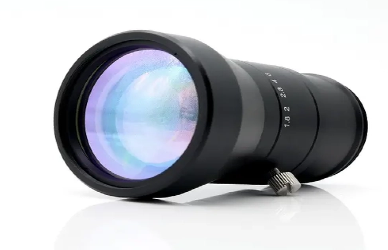
Beam splitter prisms are vital in optical systems, especially those using Short-Wave Infrared (SWIR) lenses, as they enable the simultaneous capture of multiple wavelengths. This boosts efficiency, accuracy, and detail in imaging. Here’s how they improve system performance:
Beam splitter prisms enhance efficiency by dividing light into multiple paths, allowing for the simultaneous capture of different wavelengths. This reduces the need for extra optical components and speeds up data capture.
Example: In SWIR imaging, beam splitters separate light into SWIR and visible bands, enabling parallel analysis of surface details and internal properties.
By directing light to separate detectors, beam splitters improve accuracy by ensuring each sensor focuses on its specific wavelength range, minimizing interference and improving precision.
Example: In medical imaging, beam splitters enable clear tissue analysis by directing visible and SWIR light to different detectors, optimized for each wavelength.
Beam splitters facilitate multi-spectral imaging, capturing several spectral components at once, providing richer, more detailed data for material or object analysis.
Example: In industrial inspection, beam splitters capture both visible and SWIR light simultaneously, offering detailed surface and material property analysis.
Beam splitters enable multi-channel imaging, capturing multiple wavelengths at once, essential for in-depth analysis in fields like spectroscopy or environmental monitoring.
Example: In scientific research, beam splitters allow the simultaneous capture of different chemical components, enhancing sample analysis.
By splitting light into different channels, beam splitters reduce the load on detectors, improving efficiency while simplifying the optical setup, which reduces system complexity.
Example: In astronomy, beam splitters capture both visible and infrared data simultaneously, reducing complexity and improving image quality.
Beam splitter prisms play a key role in multi-spectral Short-Wave Infrared (SWIR) imaging systems by enabling simultaneous capture of different wavelengths. Below are key applications:
Beam splitters combine visible and infrared light to inspect materials for defects and internal properties, enhancing product quality in industrial automation.
Example: In manufacturing, beam splitters help detect surface defects and material composition in real time.
By separating visible and infrared light, beam splitters provide enhanced tissue analysis, improving diagnostic accuracy for conditions like tumors or blood flow issues.
Example: In endoscopy, beam splitters enable both surface and deep tissue imaging for clearer diagnosis.
Beam splitters enable multi-spectral analysis in spectroscopy and environmental monitoring, allowing simultaneous capture of multiple light wavelengths for better data collection.
Example: In environmental monitoring, beam splitters help detect pollutants or analyze plant health using visible and SWIR light.
In low-visibility conditions, beam splitters improve detection by capturing both visible and infrared light, enhancing performance in surveillance and security systems.
Example: In military surveillance, beam splitters help detect objects in darkness or fog using both visible and infrared light.
Multi-spectral SWIR imaging captures light from different spectral bands simultaneously, allowing for more detailed analysis of materials or objects.
A beam splitter prism separates incoming light into distinct spectral bands, directing each band to different sensors for simultaneous analysis.
Beam splitter prisms improve efficiency by enabling simultaneous capture of multiple wavelengths, reducing the need for additional components and improving system performance.
Yes, beam splitter prisms can be designed to work with both visible and SWIR light, allowing for multi-spectral imaging across both ranges.
Beam splitter prisms are crucial components in multi-spectral Short-Wave Infrared (SWIR) imaging systems, as they enable the simultaneous capture of multiple wavelengths, significantly enhancing imaging and data analysis. By dividing light into distinct spectral bands, beam splitter prisms allow for more detailed and comprehensive imaging, improving accuracy and efficiency in various applications such as machine vision, medical diagnostics, scientific research, and security systems. Their ability to separate light based on wavelength, intensity, or polarization ensures that each spectral component is captured and analyzed independently, providing clearer images and more valuable data. Ultimately, beam splitter prisms contribute to optimized performance in SWIR imaging systems, enabling better insights and more informed decisions across a wide range of industries.


