
Views: 0 Author: Site Editor Publish Time: 2026-11-10 Origin: Site


In a bustling operating room, every second counts. Capturing high-definition video is critical for accurate diagnostics and successful interventions. However, specialized lenses and electronic camera heads do not naturally fit together. They require a precision-engineered bridge to link them.
This is where the optical interface becomes an essential piece of equipment. It serves as the vital mechanical link connecting a surgical scope to a video sensor. A flawless connection ensures pristine image quality and absolute physical stability during operations.
In this comprehensive guide, we explore the core mechanics of this device. You will learn its critical role in surgical visualization. Furthermore, we will break down how to select the correct metrics for your specific sensor. Finally, you will discover key buying considerations to help you choose the right equipment for your professional imaging system.
A specialized camera adapter securely connects a surgical scope to a video camera head.
Its primary functions include aligning the optical pathway, adjusting focus, and protecting the camera sensor from moisture and biological debris.
The internal lens metrics directly determine the magnification level and the field of view displayed on the surgical monitor.
These instruments are essential in minimally invasive procedures, ensuring high-definition image transfer without optical distortion.
Choosing the right device requires evaluating critical factors like autoclavability, optical clarity, and compatibility with your existing medical imaging systems.
To fully grasp the mechanics of modern medical imaging, one must first understand the fundamental role of this device. In objective terms, an Endoscope Coupler is a precision interface utilized extensively in clinical diagnostics. Without this component, transmitting the visual data gathered by the scope to a viewing monitor would be physically impossible.
The standardized threaded mounting system features a 1-inch diameter thread with exactly 32 threads per inch. This universal manufacturing standard ensures that various camera heads can accept standardized optical attachments regardless of the brand.
In practical application, the device acts as a crucial optical bridge. One end features a specialized mechanical clamp gripping the eyepiece. Meanwhile, the other end threads securely into the camera head. Inside this bridge lies a complex arrangement of specialized lenses. They capture the light exiting the scope and focus it precisely onto the camera sensor. Consequently, this internal design guarantees that the visual data remains intact and sharply focused.
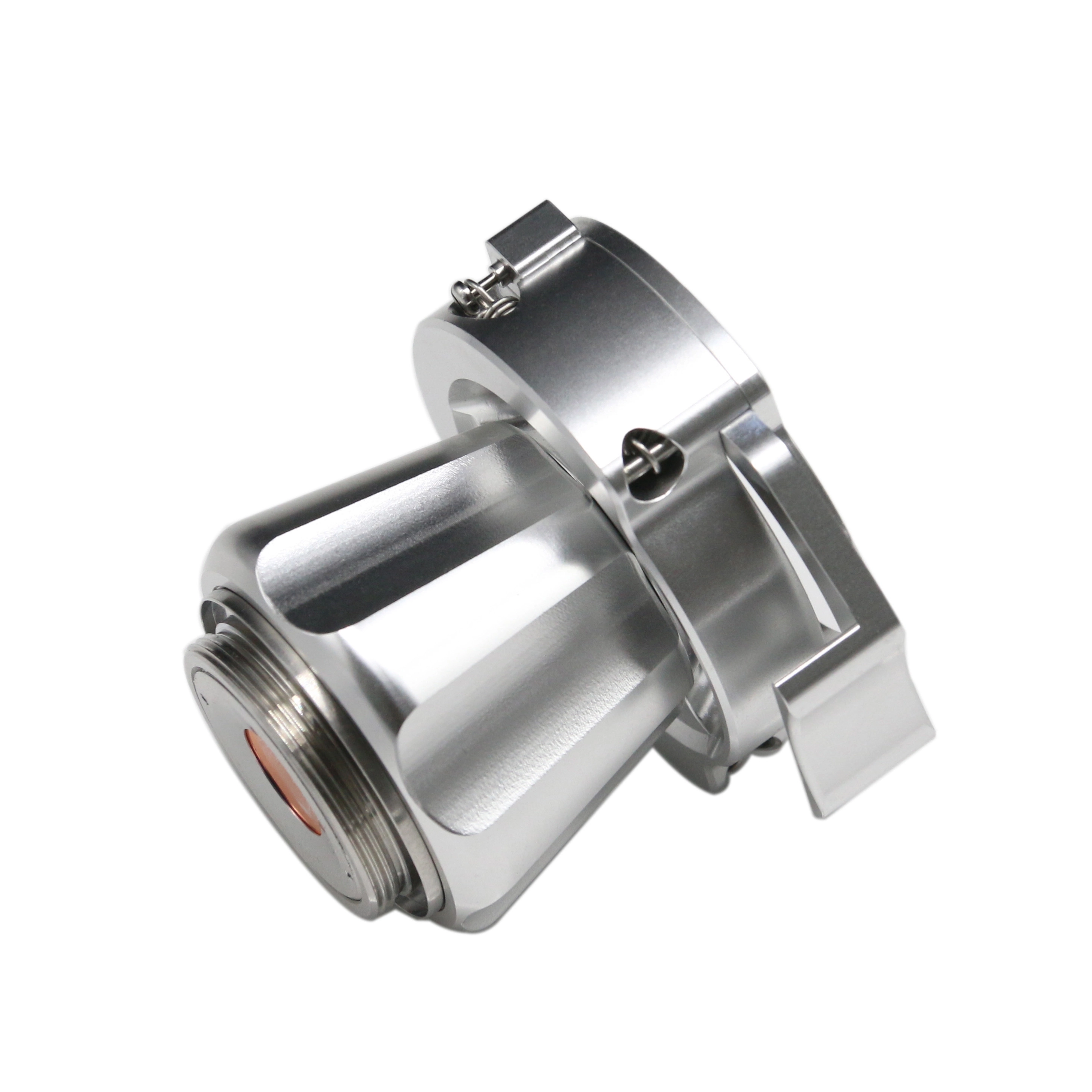
During delicate procedures, any unexpected movement between instruments can compromise safety. The device provides a robust mechanical connection. It utilizes a locking mechanism like a secure collet or multi-jaw clamp to firmly hold the scope in place. This rigid lock prevents wobbling or accidental detachment while the surgeon maneuvers the equipment through complex anatomical structures.
Beyond a simple physical connection, the internal optics manage seamless image transfer. The internal lens system takes the circular image generated by the scope and projects it perfectly onto the rectangular image sensor. High-quality optical alignment prevents heavy vignetting known as the porthole effect. It ensures edge-to-edge clarity, which is paramount when observing minute tissue details.
Biological structures vary significantly in depth. This requires continuous visual adjustments during an examination. Most medical-grade units feature a tactile manual focusing ring. This ergonomic control allows the surgical team to fine-tune image sharpness in real-time. By adjusting the physical distance between the internal lenses, the operator maintains a highly resolved image throughout the procedure.
Operating rooms routinely expose equipment to saline solutions and harsh chemical cleaning agents. A premium unit features strict environmental sealing. Medical-grade O-rings and hermetic seals create a waterproof barrier. Specifically, this critical feature protects the sensitive electronic components of the camera head from moisture ingress.
Rigid Endoscopy encompasses a variety of minimally invasive procedures. Unlike flexible scopes that rely on fiber optics, rigid models use a solid metal tube containing precisely aligned glass rod lenses. This specific design yields superior imaging but requires an equally capable optical transmission system.
The synergy between a rod-lens system and the interface makes modern minimally invasive surgery highly effective. The scope gathers maximum anatomical detail. The interface then accurately scales and focuses this data, delivering true 4K resolution to the operating room displays.
Looking at the broader landscape of medical imaging, the industry is experiencing a rapid shift toward ultra-high-definition visualization and AI-assisted diagnostics. Modern operating rooms are increasingly adopting 4K, 3D, and fluorescence-guided imaging systems. These advanced technologies demand absolutely flawless optical inputs. Surgeons now require zero-latency, true-color tissue rendering. If the internal glass suffers from chromatic aberration, even the most advanced diagnostic software will struggle to differentiate between healthy and malignant tissues. This trend dictates that modern optical interfaces must be precision-engineered with multi-coated glass to handle massive data throughput.
When evaluating an optical interface, one of the most critical technical specifications to consider is the Focal Length. In this context, it refers to the distance between the optical center of the lens system and the focal point where the image is projected onto the sensor. It is universally measured in millimeters.
There is a direct inverse relationship between this metric and the field of view. A shorter distance provides a much wider field of view, but the resulting image appears smaller on the surgical monitor. Conversely, a longer distance acts like a zoom lens. It delivers higher magnification but significantly narrows the visible field of view.
To achieve the optimal image, the specification must be precisely matched to the physical size of the digital sensor. For instance, a 1/3-inch sensor typically pairs best with an F22 lens system. The F22 specification, prominently featured in high-end medical equipment, is a highly sought-after standard because it offers a perfect balance of magnification and field of view for standard medical cameras. A larger 1/2-inch sensor requires a 25-millimeter to 28-millimeter distance to prevent vignetting. Choosing an incorrect metric will result in an image that is either unacceptably small or overly zoomed.
It is a common misconception that any standard industrial Camera Adapter can be used in a medical setting, provided the threads match. While an industrial unit and a medical unit share the same fundamental threading, their construction and optical purity are vastly different.
Standard industrial units are designed for controlled environments like manufacturing floors. They are often constructed from standard aluminum. In contrast, medical-grade units are subjected to extreme conditions. They are machined from high-grade, biocompatible stainless steel designed to resist highly corrosive hospital cleaning agents.
To clarify these technical differences, refer to the engineering comparison below.
Specification | Standard Industrial Adapter | Medical-Grade Coupler |
|---|---|---|
Material Construction | Standard Aluminum | Biocompatible Stainless Steel |
Optical Glass | Basic Glass Elements | Multi-coated Anti-Reflective Glass |
Sterilization Tolerance | Wipe-down only | Fully Autoclavable |
Environmental Sealing | Minimal dust protection | Hermetic seals and medical O-rings |
Resolution Support | Standard Definition / 1080p | True 4K Ultra-HD |
The most definitive difference lies in sterilization. Standard units will melt or suffer complete seal failure if placed in a medical autoclave. High-quality medical units are explicitly engineered with laser-welded seams and high-temperature O-rings that survive the repeated extreme heat of steam sterilization.
For hospital procurement teams and biomedical engineers, selecting the right device is a critical investment. The following standards are paramount when evaluating options on the market.
As operating rooms continuously upgrade to 4K monitors, the optical components must keep pace. A 4K camera is only as good as the glass in front of it. Look for units explicitly rated for true 4K resolution. These utilize high-resolution, low-dispersion lenses that ensure edge-to-edge sharpness.
Units are generally categorized by their sterilization tolerance. Soakable units can only be submerged in chemical disinfectants. Autoclavable models can withstand steam sterilization. While autoclavable models represent a higher initial investment, they are highly recommended. They allow for faster turnaround times between surgeries and reduce the risk of chemical degradation over time.
Hospitals rarely use a single brand of equipment. Therefore, a universal clamp design is highly advantageous. Premium devices feature adaptable jaw mechanisms that can securely grip standard eyepieces from various major industry manufacturers. This versatility prevents the need to purchase specific adapters for every surgical tray.
The intense light required for internal procedures can easily cause glare within the optical pathway. Ensure the equipment features a broadband anti-reflective coating on its internal lenses. This coating significantly reduces light bouncing between the glass elements. The result is a brighter, higher-contrast image vital in deep-cavity surgeries.
Even the highest quality precision instruments require proper routine maintenance to ensure consistent optical performance. Biomedical technicians frequently encounter a few common issues.
If the surgical image suddenly appears cloudy, it is highly probable that moisture has breached the internal seals. This often occurs if a non-autoclavable unit is accidentally subjected to steam sterilization. Once moisture is inside the lens array, the device must typically be sent to the manufacturer for professional rebuilding.
After multiple autoclave cycles, the manual focus ring may become stiff. This is usually due to the high heat breaking down the specialized lubricants used in the focusing helicoid. To prevent this, ensure the equipment is completely dry before sterilization. If stiffness occurs, it requires professional relubrication using medical-grade grease.
The external glass surfaces are coated with delicate anti-reflective layers. Wiping these lenses with abrasive surgical towels will cause micro-scratches. Over time, these scratches scatter light and severely degrade the image. Always use approved optical cleaning tissues and medical-grade isopropyl alcohol.
An optical interface is much more than just a simple connector. It is a vital optical tool that dictates the quality and safety of medical imaging. By serving as the secure bridge between the surgical scope and the camera head, it ensures that surgeons receive the clear visual data required for complex procedures.
Investing in a premium C Mount Coupler with the correct specifications, such as an F22 focal length and 4K resolution support, will maximize the potential of your camera system. Evaluate your current medical imaging setup today. Explore precision-engineered optical solutions from trusted manufacturers like Rising-EO to ensure optimal surgical outcomes and long-lasting durability in your operating rooms.
While the threaded mount on the camera side is a universal standard, the clamp on the scope side and the internal lens metrics vary significantly. You must choose a unit that precisely matches your specific camera sensor and eyepiece to ensure proper mechanical fit and optical function.
The main difference lies in the flange focal distance. A standard mount has a distance of 17.526 millimeters, while a CS-mount is 12.5 millimeters. You can successfully use a standard lens on a CS-mount camera by adding a 5-millimeter spacer ring. However, the reverse configuration is optically impossible without severe focus issues.
Not all models can withstand this rigorous process. You must specifically purchase an autoclavable unit. Standard or soakable models will suffer complete seal failure and optical degradation when exposed to the extreme heat and pressure generated during an autoclave sterilization cycle.
A blurry image is typically caused by three main factors. First, the manual focus ring may need fine-tuning to match the working distance. Second, an incorrect lens metric for your sensor size can cause optical distortion. Finally, internal moisture ingress from a compromised seal can fog the lenses, requiring professional repair.
Proper cleaning requires careful handling of the delicate optical glass. Use an enzymatic cleaner to remove biological debris, followed by a gentle wipe using lint-free optical tissues and medical-grade isopropyl alcohol. Always ensure the device is completely dry before placing it in the autoclave to prevent steam damage to the internal lubricants.


