
Views: 0 Author: Site Editor Publish Time: 2025-12-31 Origin: Site


Short-Wave Infrared (SWIR) lenses are essential components in imaging systems that operate within the short-wave infrared spectrum, typically ranging from 0.9 to 1.7 microns. The performance of these lenses is highly dependent on the materials used in their construction. Common materials such as silicon, germanium, and chalcogenide glasses are frequently chosen for their unique optical properties that allow for efficient transmission and clarity in the SWIR wavelength range. These materials are carefully selected to ensure that SWIR lenses offer high image quality, minimal distortion, and reliable performance in various applications, such as machine vision, medical imaging, surveillance, and scientific research. The material choice directly impacts lens efficiency, durability, cost, and overall system performance, making it a critical factor in the design and functionality of SWIR imaging systems.
Short-Wave Infrared (SWIR) lenses are specialized optical components that focus light in the short-wave infrared spectrum, typically between 0.9 to 1.7 microns. Unlike visible light lenses, SWIR lenses are designed to transmit and focus infrared light, providing capabilities that are essential for imaging in environments where traditional visible light cameras cannot function effectively. These lenses are crucial in numerous high-tech applications, offering unique advantages in terms of sensitivity, material detection, and environmental resilience.
SWIR lenses are engineered to capture light outside the visible spectrum. Their design ensures that they are optimized for wavelengths that provide enhanced imaging capabilities, such as improved contrast, better image clarity in low light conditions, and the ability to see through materials like fog, smoke, or dust. The key to their function lies in the choice of materials, such as silicon, germanium, and chalcogenide glasses, which have excellent transmission properties in the SWIR range.
Machine Vision:
SWIR lenses are extensively used in machine vision for industrial automation, quality control, and material inspection. They excel in environments where visible light cameras struggle, offering high-resolution imaging and the ability to detect defects or contaminants on surfaces that would otherwise be invisible.
Medical Imaging:
In medical applications, SWIR lenses play a crucial role in non-invasive diagnostics, especially in endoscopic imaging. They allow better tissue contrast and penetration compared to visible light, making them useful for visualizing veins, blood vessels, and soft tissues in medical procedures.
Spectroscopy:
SWIR lenses are essential for spectroscopic applications that require the analysis of materials' chemical composition. They are used in fields like environmental monitoring, food quality analysis, and chemical research, helping detect specific molecular signatures based on the unique light absorption properties of materials in the SWIR range.
SWIR lenses often work in conjunction with other optical elements, such as beam splitter prisms, to enhance imaging capabilities. Beam splitters divide incoming light into different spectral channels, allowing simultaneous multi-spectral imaging with SWIR lenses. This combination makes it possible to analyze a broader range of wavelengths in a single system, improving the versatility and precision of imaging systems in various applications.
Short-Wave Infrared (SWIR) lenses are essential for capturing light in the SWIR spectrum (0.9 to 1.7 microns), and their performance depends heavily on the materials used. Below are the key materials commonly used in SWIR lenses, each offering unique advantages.
Silicon is a popular choice for SWIR lenses due to its:
Transparency: Silicon transmits light efficiently in the SWIR range (1.1–1.7 microns), making it ideal for many industrial applications.
Cost-Effectiveness: It is relatively inexpensive compared to other materials, making it a go-to for mass production.
Durability: Silicon is robust, with high resistance to temperature changes and mechanical stress.
Applications: Commonly used in machine vision, industrial inspection, and surveillance systems.
Germanium is favored for its high performance in SWIR lenses:
High Refractive Index: Offers compact lens designs and better optical resolution.
Superior Transmission: Excellent transmission from 2 to 14 microns, making it ideal for high-performance applications.
Optical Clarity: Germanium lenses provide excellent imaging quality with minimal distortion.
Cost: It is more expensive than silicon, making it suitable for high-end applications like thermal imaging and military systems.
Chalcogenide glasses are composed of elements like sulfur, selenium, and tellurium, and they offer several benefits:
Broad Transmission Range: Effective in both the SWIR and mid-wave infrared ranges (1–6 microns).
High Transmission Efficiency: Highly transparent to infrared light, making them ideal for longer wavelength imaging.
Design Flexibility: These glasses can be molded into complex shapes, allowing for custom lens designs.
Durability: Perform well in harsh environments, including high temperatures.
Applications: Used in scientific research, thermal imaging, and spectroscopy.
Silicon is best for high-volume, budget-conscious applications.
Germanium excels in high-performance systems that require clarity and precision.
Chalcogenide glasses provide flexibility and performance across a broader infrared range, making them suitable for specialized applications.
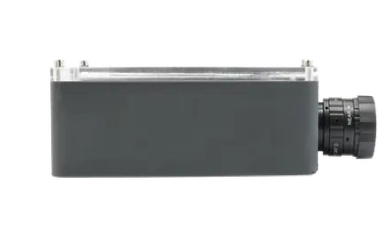
The performance of Short-Wave Infrared (SWIR) lenses is largely determined by the materials used in their construction. These materials influence light transmission, image clarity, and overall efficiency in the SWIR range (0.9 to 1.7 microns). Just as a beam splitter prism divides light in optical systems, the choice of material in SWIR lenses plays a crucial role in optimizing the system’s performance. Here's how different materials affect lens performance:
Silicon (Si): Silicon offers good transmission in the SWIR range (1.1 to 1.7 microns), making it ideal for most industrial applications. However, its performance drops slightly beyond 1.7 microns.
Germanium (Ge): Germanium provides superior transmission across a wider SWIR range (2–14 microns) and is highly effective for high-resolution and high-performance applications.
Chalcogenide Glasses: These materials provide broad infrared transmission (1 to 6 microns), suitable for applications requiring SWIR and mid-wave infrared light detection.
Silicon: Silicon can experience chromatic aberrations and may not offer the sharpest images, limiting its use in high-precision applications.
Germanium: Germanium provides excellent optical clarity with minimal distortion, making it ideal for applications requiring high-resolution imaging, such as thermal imaging and military systems.
Chalcogenide Glasses: These materials help maintain clear, consistent images, even in extreme conditions, making them ideal for harsh environments.
Silicon: Silicon is more prone to chromatic aberrations, leading to slight distortions, especially in multi-spectral imaging.
Germanium: Less prone to aberrations, ensuring clear and sharp images with minimal distortion across the SWIR spectrum.
Chalcogenide Glasses: These glasses offer low distortion, especially in custom designs, and can handle high temperatures and environmental stresses.
Silicon: Silicon is durable but may suffer from thermal expansion at higher temperatures.
Germanium: Germanium is more stable under normal conditions, though it may have slight performance variation with temperature.
Chalcogenide Glasses: Chalcogenides are highly resistant to thermal and environmental conditions, making them ideal for rugged applications.
The materials used in Short-Wave Infrared (SWIR) lenses are crucial in determining their durability, performance, and cost-effectiveness. Common materials like silicon, germanium, and chalcogenide glass each have unique advantages depending on the specific requirements of the application.
Durability:
Silicon is highly durable and resistant to temperature fluctuations and mechanical stress, making it ideal for industrial applications.
Performance:
Silicon offers good transmission in the SWIR range (1.1–1.7 microns), providing adequate image quality for many applications, though it performs less well in the far-end SWIR spectrum.
Cost-Effectiveness:
Silicon is one of the most cost-effective materials for SWIR lenses, making it suitable for high-volume production in machine vision, surveillance, and industrial inspection.
Durability:
Germanium is thermally stable and performs well under extreme conditions, making it durable for high-end military or aerospace applications.
Performance:
Germanium provides superior transmission across the SWIR spectrum (2–14 microns), offering high-resolution imaging with minimal distortion, ideal for thermal imaging and surveillance.
Cost:
Germanium is more expensive than silicon but justifies the cost for high-performance applications requiring clarity and sensitivity.
Durability:
Chalcogenide glasses are highly resistant to extreme temperatures and environmental stress, ideal for harsh conditions like high humidity and temperature variations.
Performance:
These materials offer broad transmission across the SWIR and MWIR ranges, making them perfect for multi-spectral applications. They also provide minimal optical distortion.
Cost:
Chalcogenide glasses are more affordable than germanium, offering a balance of performance and cost for custom, multi-spectral systems.
Silicon: Ideal for budget-conscious applications with moderate performance, often used in industrial inspection and machine vision.
Germanium: Best for high-performance applications requiring superior optical quality, like thermal imaging and military systems, but at a higher cost.
Chalcogenide Glasses: Offer excellent performance across a broad infrared range with high durability, making them ideal for multi-spectral systems and custom optical designs.
Silicon is widely used for SWIR lenses due to its excellent transmission properties in the SWIR wavelength range, making it suitable for imaging applications.
Germanium has a high refractive index and is transparent to SWIR light, making it ideal for high-performance lenses in industrial and military applications.
Chalcogenide glasses are transparent to infrared light and are used in SWIR lenses for their high transmission and ability to withstand harsh environments.
Materials like germanium and chalcogenide glasses are more expensive than silicon, which can impact the overall cost of SWIR lenses, especially in high-end applications.
Material selection in Short-Wave Infrared (SWIR) lenses is crucial for ensuring optimal performance across a wide range of applications. Each material — silicon, germanium, and chalcogenide glass — offers distinct advantages in terms of durability, transmission efficiency, and image clarity. Silicon is ideal for cost-effective, high-volume applications, providing adequate performance in industrial and machine vision systems. Germanium excels in high-resolution, high-performance systems, such as thermal imaging and military applications, where clarity and sensitivity are critical. Chalcogenide glasses offer excellent broad-spectrum transmission and high durability, making them perfect for multi-spectral systems and harsh environments. By carefully choosing the right material based on specific application requirements, SWIR lenses can achieve superior image quality, reliability, and efficiency, ensuring that they meet the demands of industries such as machine vision, medical imaging, and spectroscopy.


