
Views: 0 Author: Site Editor Publish Time: 2025-09-23 Origin: Site


Endoscope lens types differ in number, orientation, and function, which shapes how you see inside the body during medical procedures. These differences affect what you can view, how clear the image looks, and how flexible the tool is for different tasks. For example, a single-function mirror gives basic visuals, while multi-function mirrors add channels for tools or lighting.
Type of Endoscope Lens | Function Description | Examples of Applications |
|---|---|---|
Single-function mirror | Observation only, no working channel | Basic diagnostic procedures |
Multi-function mirror | Includes working channels for lighting or surgery | Surgical procedures |
Ear, Nose, and Throat Endoscope | Specialized for ENT regions | ENT diagnostics and surgeries |
You might notice a trade-off between field of view and image quality. A larger field of view can lower the resolution, but it helps when you need to see more at once.
Lens material and relay systems also play a key role in Endoscope Lenses, impacting both durability and clarity.
Endoscope lenses vary in type, function, and material, affecting image clarity and procedure effectiveness.
Single-use endoscopes reduce infection risks and improve workflow efficiency, making them ideal for busy medical settings.
Dual-lens systems enhance flexibility and allow for real-time visualization, which supports precise interventions.
Choosing the right lens material, like glass or fused quartz, improves durability and optical clarity during procedures.
Advanced features like auto-focus and rotating lenses provide better control and accuracy, enhancing patient safety and outcomes.
Endoscope lenses play a vital role in medical imaging. You rely on these lenses to deliver clear, accurate visuals during endoscopy. Each lens type serves a unique function, and the choice of lens materials affects both durability and optical clarity.
Objective lenses form the front part of the endoscope. You use them to capture high-resolution images with a wide field of view. These lenses are made from high-quality glass or optical materials. The table below shows the main categories of lenses used in endoscopes and their defining characteristics:
Lens Type | Characteristics |
|---|---|
Objective Lenses | High resolution, wide field of view, made from high-quality glass or optical materials. |
Relay Lenses | Maintain image quality and orientation, crucial for accurate final images. |
Camera Lenses | Provide high clarity and resolution for real-time imaging on monitors. |
Eyepiece Lenses | Magnify images for detailed examination, must offer high clarity without distortion. |
You depend on objective lenses for precise imaging during surgical examination and diagnosis.
Relay lenses transmit the image from the objective lens to the eyepiece or camera. You benefit from relay lens systems because they maintain image quality and orientation. Most relay systems use rod lenses and additional lens systems. These systems often combine biconvex rod lenses and meniscus lenses. This design increases image brightness and corrects errors like astigmatism. You get a simplified production process and cost advantages because unnecessary glass-air surfaces are eliminated.
Tip: Relay lens systems are essential for accurate image transmission in endoscope design.
Lens materials determine how well your endoscope performs. You want materials that offer durability and optical clarity. The table below lists common lens materials and their optical properties:
Material | Optical Properties |
|---|---|
Glass | Low dispersion, high transmittance in visible and near-infrared spectra |
Sapphire | Exceptional hardness, scratch resistance |
Plastic | Optical clarity, lightweight; includes acrylic and polycarbonate |
Fused Quartz | Highly transparent in UV and visible spectra |
Calcium Fluoride | Excellent UV transmittance; used in specialized applications |
Borosilicate glass and fused silica stand out for their durability and thermal stability. You find borosilicate glass especially useful because it resists chemicals and thermal shock. Fused silica offers high transparency and withstands demanding environments. These properties make them ideal for endoscope lenses in medical settings.
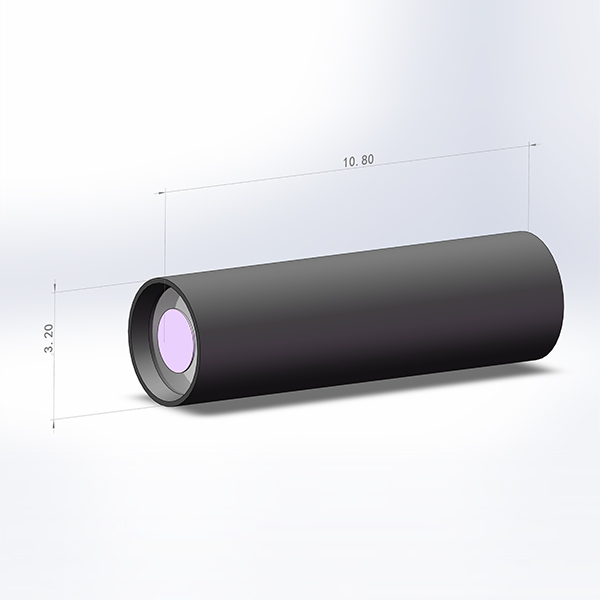
Endoscope lenses come in several types, each designed for specific tasks in medical and industrial settings. You need to understand how each lens works to choose the best option for your procedure. The right lens improves optical clarity, workflow, and patient safety.
Single-lens endoscopes offer a straightforward design. You use these for basic diagnostic tasks and routine endoscopic procedures. The single-lens system provides reliable optical clarity and is easy to operate. Many hospitals now use single-use endoscopes, which help reduce infection rates and improve workflow efficiency. You do not need to reprocess these scopes, so you can perform procedures quickly, even outside regular hours. This design is especially useful in busy clinics, ICUs, and remote locations. You get a new sterile endoscope for each patient, which lowers the risk of cross-contamination and increases productivity. Single-lens endoscopes also eliminate complex cleaning steps, making them ideal for early disease detection and settings where reprocessing is impractical.
Dual-lens endoscopes give you more flexibility during procedures. You benefit from real-time visualization and targeted biopsies. These lenses allow for precise interventions and minimally invasive techniques. You can perform procedures with less risk and faster recovery times. Dual-lens systems reduce the need for more invasive surgery, which helps you achieve better outcomes for your patients. You often find dual-lens endoscopes in Surgical examination and advanced diagnostic tasks.
Key advantages:
Enables targeted biopsies
Allows precise interventions
Minimizes invasiveness
Provides real-time visualization
Reduces complications and speeds recovery
Triple-lens endoscopes expand your field of view and enhance image quality. You use these when you need to see more detail or cover a wider area. The triple-lens system combines three lenses to deliver improved clarity and depth perception. This design is valuable in complex Surgical examination, where you need to visualize multiple tissue layers or structures at once. You gain better control and accuracy, which supports advanced procedures and research applications.
Auto-focus endoscope lenses use advanced technology to keep images sharp at any distance. You do not need to adjust the focus manually. Full-range autofocus (FAF) lets you move seamlessly from near to far views, which improves accuracy and efficiency during endoscopy. You get clearer images, which helps you make better diagnoses and perform safer treatments. Auto-focus systems also make procedures more comfortable for patients and easier for you to manage.
Tip: Auto-focus lenses boost diagnostic precision and treatment efficiency by maintaining optimal clarity throughout the procedure.
Rotating dual-lens endoscopes offer unique versatility. You can rotate the lens to change the viewing angle without moving the entire endoscope. This feature helps you inspect hard-to-reach areas and adjust your perspective during Surgical examination. You gain more control over your field of view, which is useful in procedures that require frequent repositioning or multi-angle visualization. Rotating dual-lens systems combine the benefits of dual-lens clarity with added flexibility.
Rod lenses and GRIN (Gradient Index) lenses play a key role in rigid endoscopes. You rely on rod lenses for high optical clarity and superior image quality. Rigid endoscopes with rod lenses deliver brighter, sharper, and more accurate images than flexible scopes. The rod lens system uses polished glass rods to achieve high resolution and excellent color reproduction. You can select rigid endoscopes with different viewing angles to suit your needs.
GRIN lenses simplify the optical design by reducing the number of lens elements. You benefit from lower costs and easier manufacturing. However, GRIN lenses may have challenges with color correction, which you can address through advanced design techniques. While GRIN lenses maintain acceptable image quality, rod lenses remain the top choice for applications that demand high fidelity and optical clarity.
Note: Common failure modes for endoscope lenses include blurry vision, lack of focus, and dim illumination. You should monitor lens performance and schedule regular maintenance to ensure consistent image quality.
Lens Type | Features | Advantages | Typical Use Cases |
|---|---|---|---|
Single-Lens | Simple, single-use, sterile | Easy workflow, low infection | ICU, remote, routine diagnostics |
Dual-Lens | Two lenses, real-time view | Precise, minimally invasive | Biopsies, targeted interventions |
Triple-Lens | Three lenses, wide view | Enhanced clarity, depth | Complex surgery, research |
Auto-Focus | Autofocus technology | Sharp images, easy use | Diagnostics, treatment |
Rotating Dual-Lens | Rotatable, dual-lens | Flexible, multi-angle view | Multi-angle exams, ENT |
Rod Lens | Polished glass rods | High resolution, brightness | Rigid endoscopes, surgery |
GRIN Lens | Gradient index, simple design | Cost-effective, compact | Rigid scopes, basic imaging |
You need to match the lens type to your procedure to achieve the best results in endoscopy. The right endoscope lenses improve optical clarity, workflow, and patient safety.
You rely on rigid endoscopes for procedures that demand high precision and optical clarity. These devices use advanced lens designs, such as cylindrical and aspheric lenses, to improve image quality and reduce optical aberrations. Aspheric lenses correct aberrations better than traditional spherical lenses, which helps you maintain sharp visuals during endoscopic procedures. The latest rigid endoscopes feature 4K Ultra High Definition (UHD) optics, new glass lens telescopes, and single-use endoscopes. These innovations deliver four times the resolution and better color reproduction compared to older HD models. You benefit from enhanced image quality and clarity, which supports more accurate Surgical examination.
Lens Design | Performance Improvement |
|---|---|
4K Ultra High Definition (UHD) | Four times the resolution, better color reproduction |
New glass lens telescopes | Enhanced image quality and clarity |
Single-use endoscopes | High-definition optics, no degradation from reuse |
Advanced illumination technologies also improve visibility in complex surgeries. You achieve high-performance imaging by considering factors like pupil size and lens aberrations.
Fluorescence endoscopy transforms how you visualize tissues and organs. This technique uses specialized dyes and illumination systems to enhance visibility and image quality. You can see details that standard endoscopy might miss, leading to more accurate diagnoses and treatment options. The effectiveness of fluorescence endoscopy depends on matching the lens and illumination system to the excitation wavelength of the dyes. NIR fluorescence imaging allows you to detect subtle changes in tissue, which is vital for Surgical examination and cancer detection. You use fluorescence endoscopy to improve outcomes in procedures involving the gastrointestinal tract, lungs, and other organs.
Fluorescence endoscopy enhances visibility and image quality with specialized dyes.
You achieve detailed imaging for more accurate diagnoses.
Lens and illumination choices must match dye excitation wavelengths.
NIR fluorescence imaging supports advanced tissue visualization.
Tip: Select the right lens and illumination system for optimal results in fluorescence endoscopy.
Image transfer lens designs play a crucial role in the resolution and clarity of endoscopic images. You need lenses that minimize focus shift across different wavelengths to maintain consistent image quality. Managing chromatic aberration with low-dispersion and anomalous dispersion optical glass reduces color fringing and sharpens images. The modulation transfer function (MTF) helps you measure and optimize imaging performance. Recent advancements in lens systems allow you to visualize internal structures in real time, even in hard-to-reach areas. NIR fluorescence imaging and smart endoscopic devices with AI capabilities further enhance diagnostic accuracy and efficiency.
You need to choose the right lens for each endoscope procedure. The table below helps you compare lens types, features, and best use cases. This summary gives you a clear view of how each lens supports different tasks in endoscopy.
Lens Type | Key Features | Best Use Cases | Benefits for You |
|---|---|---|---|
Glass | High-resolution, strong optical clarity | Medical endoscopy, Surgical examination | Accurate diagnosis, clear images |
Plastic | Lightweight, flexible | Industrial endoscope, routine checks | Easy handling, cost-effective |
Fused Quartz | Heat-resistant, durable | High-temperature industrial endoscopy | Reliable in tough environments |
Calcium Fluoride | UV transmission, specialized | UV imaging in medical endoscope | Enhanced clarity for UV detection |
Aspheric Lens | Low distortion, sharp focus | Surgical examination, advanced imaging | Improved accuracy, patient safety |
Rod Lens | Bright, sharp images | Rigid endoscope, Surgical examination | Superior optical clarity |
GRIN Lens | Compact, simple design | Basic imaging, rigid endoscope | Lower cost, easy manufacturing |
Auto-Focus | Maintains sharpness at all distances | Diagnostics, treatment procedures | Fast workflow, clear visuals |
Rotating Dual-Lens | Adjustable viewing angle | ENT exams, multi-angle inspection | Flexible perspective, better reach |
Tip: You get better results when you match the lens type to your procedure. For example, glass lenses give you the best clarity for medical diagnosis, while plastic lenses work well for flexible scopes in industrial settings.
You also need to consider the differences between digital and optic endoscopes. Digital endoscopes weigh less and offer a larger field of view. You see a square visual field with less distortion and better close-up resolution. Optic endoscopes are heavier and have a circular field, but they provide better resolution at longer distances and less color difference. Both types support different needs in endoscopy.
Feature | Digital Endoscope | Optic Endoscope |
|---|---|---|
Weight | Lighter (39 g) | Heavier (214 g) |
Field of View | Larger (100–131°) | Smaller (89°) |
Visual Field Shape | Square | Circle |
Distortion | Smaller | Larger |
Resolution | Better close-up | Better distance |
Color Difference | Larger | Smaller |
Grey Scale Levels | 20 | 17 |
You improve patient outcomes and workflow when you select endoscope lenses that match your needs for optical clarity, durability, and versatility.
Selecting the right endoscope lens can make a big difference in your procedure’s success. You should start by thinking about the type of procedure you plan to perform. Rigid endoscopes give you the best image quality and stability. You will find these useful for precise surgical tasks where optical clarity is critical. Flexible endoscopes help you reach complex or curved areas. These work well when you need more maneuverability and patient comfort.
When you choose a lens, pay attention to lens materials. The right materials improve durability and clarity. For example, glass and fused quartz offer high resistance to heat and chemicals. You should also look for special coatings that boost light transmission and reduce glare. These features help you see details more clearly during endoscopy.
Factor | Description |
|---|---|
Material Selection | Choose optical materials based on wavelength, refractive index, and environment. |
Design Specifications | Define lens size, curvature, and magnification for your specific needs. |
Coating | Use coatings to improve light transmission and reduce reflections. |
Quality Control | Make sure lenses meet strict performance standards. |
Prototyping | Test prototypes before using them in real procedures. |
Cost is another important factor. Single-use endoscope lenses cost more per procedure but save you time on cleaning and lower infection risks. This option works well in smaller clinics or when you want to avoid reprocessing costs. Reusable lenses have a higher upfront cost but may be better for high-volume centers.
You should also listen to user feedback. Many surgeons prefer endoscopes with advanced optics because they improve wound healing and reduce hospital stays. Clinics report fewer complications when using high-quality lenses. Smart optics and AI features are becoming more popular for early detection and better care planning.
Tip: Always match your lens choice to the procedure, image quality needs, and your workflow. The right endoscope lens helps you achieve the best clarity and patient outcomes.
You have many choices when selecting endoscope lenses. Each lens type—single, dual, triple, auto-focus, or rotating—offers unique benefits for different procedures. The table below highlights key differences:
Lens Type | Description |
|---|---|
Single-Lens | Basic, fixed-focus, front-facing sensor |
Dual-Lens | Adds a side-view sensor for more flexibility |
Triple-Lens | Two side-view sensors for a wider field of view |
Auto-Focus | Maintains sharpness automatically |
Rotating Dual-Lens | Rotates for adjustable viewing angles |
Rigid endoscopes give you unmatched optical clarity for high-precision surgeries, while flexible models help you reach difficult areas. Always match lens design, material, and application to your endoscopy needs for the best clarity and results.
You will find that Endoscope Lenses differ in number, shape, and function. Some provide a wide field of view, while others focus on high resolution. The endoscope objective lens captures the image, and the lens system affects clarity during Surgical examination.
Tip: Choose the right lens for your specific procedure to get the best results.
The endoscope objective lens determines how much detail you see. High-quality lenses give you sharper images and better color accuracy. You need this clarity for precise Surgical examination and accurate diagnosis.
Rod and GRIN lenses help you get brighter and clearer images in rigid endoscopes. Rod lenses offer high resolution, while GRIN lenses make the design simpler and more compact. Both types improve Endoscope Lenses for Surgical examination.
You can find both reusable and single-use Endoscope Lenses. Single-use lenses lower infection risk and save time on cleaning. Reusable lenses work well for high-volume Surgical examination, but you must clean and maintain them carefully.
Factor | Why It Matters |
|---|---|
Lens material | Affects durability and clarity |
Lens design | Impacts field of view and resolution |
Procedure type | Guides your choice for best results |
You should match the lens to your procedure for optimal performance.


