


A rigid endoscope is a straight, inflexible medical instrument that allows doctors to see and treat internal areas of the body. Surgeons use rigid endoscopes for direct visualization, which helps them manage complex medical conditions. These medical endoscopes require skilled hands because safety and effective outcomes depend on proper technique. The rigid endoscope bridges diagnostic and therapeutic interventions, offering accuracy in medical diagnostics and expanding options for both patients and clinicians.
Rigid endoscopy forms a foundation for modern medical procedures.
Medical professionals rely on the rigid endoscope to improve treatment planning and patient care.
Rigid endoscopes are strong, straight medical tools that give doctors clear, stable views inside the body for precise surgeries.
They have a simple metal tube design with lenses and light channels, making them durable and easier to clean than flexible scopes.
Doctors use rigid endoscopes in many fields like neurosurgery, orthopedics, and veterinary medicine for accurate diagnosis and treatment.
Flexible endoscopes bend to reach curved areas but offer less image clarity; rigid endoscopes excel in straight spaces needing high precision.
Proper cleaning and careful patient preparation are vital to ensure safety and successful outcomes with rigid endoscopy procedures.
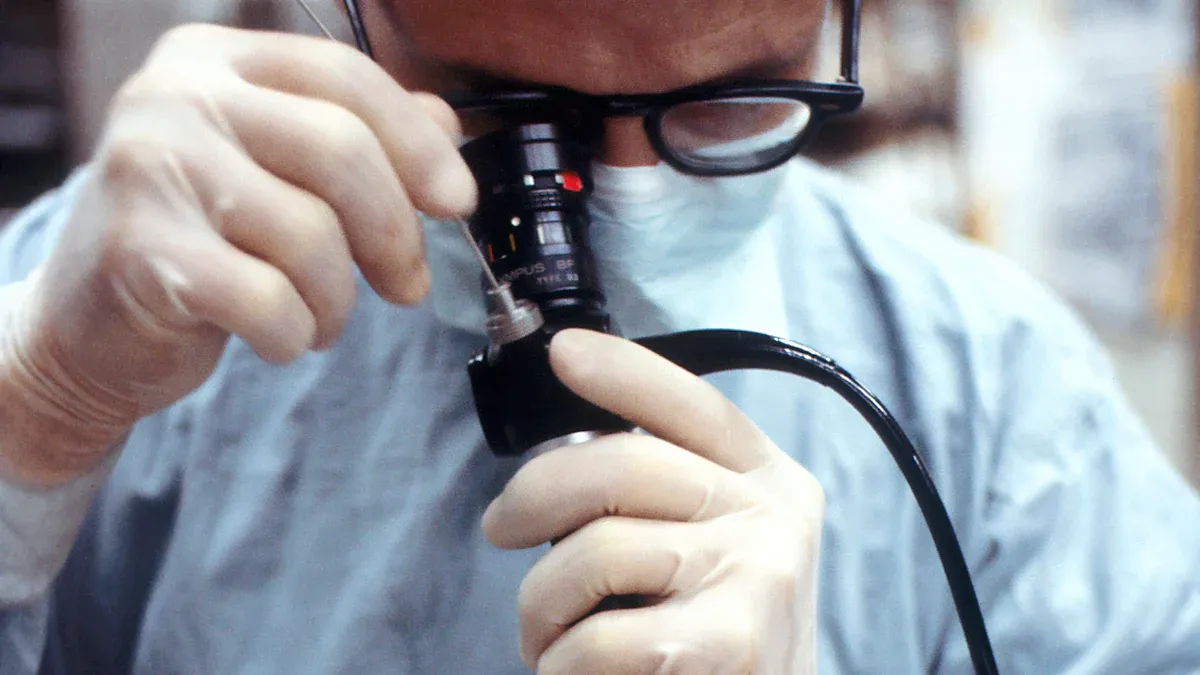
A rigid endoscope contains several important parts that work together to provide clear views inside the body. The main body of a rigid tube endoscope is a strong metal tube. This tube acts as the skeleton, giving the endoscope toughness and precision. Stainless steel alloys are common materials because they resist damage and allow for repeated sterilization. The rigid tube endoscope houses optical glass lenses and light channels. These lenses help doctors see fine details during medical procedures.
Tip: The rigid tube endoscope can be sterilized by autoclaving, which keeps it safe and reusable for many medical cases.
Most rigid tube endoscopes have a standardized eyepiece at the proximal end. This eyepiece allows doctors to attach cameras for high-quality imaging. Some models include rotatable prisms or short flexible segments. These features help steer the field of view, making endoscopic viewing more versatile. Many rigid tube endoscopes also have work channels. These channels let doctors insert instruments, flush the area, or clean the lens during surgery.
Here are the main components of a rigid tube endoscope:
Metal tube body for strength and stability
Optical glass lenses for clear visualization
Light channels to illuminate the surgical area
Standardized eyepiece for camera attachment
Rotatable prisms or flexible segments for steerable views
Work channels for instruments and cleaning
The rigid tube endoscope design supports direct insertion and manipulation. This structure gives surgeons control and accuracy, especially in well-defined anatomical spaces. The durable metal construction ensures the endoscope can withstand frequent use in both human and veterinary medical procedures.
Rigid tube endoscopes offer excellent image quality. The rigid design allows for higher image resolution compared to flexible endoscopes. Doctors prefer rigid endoscopes in many clinical settings because they provide sharper and more detailed images. The metal tube keeps the optical lenses stable, which improves resolution and overall quality.
Recent technological advancements have improved the imaging capabilities of rigid tube endoscopes. High-definition cameras now provide clearer and more detailed images. Digital imaging and recording features help with patient documentation and training. Some rigid tube endoscopes use augmented reality and artificial intelligence to enhance visualization and support surgical planning.
Clinical studies show that rigid endoscopes deliver better image quality than flexible models. Flexible endoscopes offer more mobility and smaller diameters, which help in pediatric cases and complex anatomy. However, flexible endoscopes often have lower image quality and fewer operative tools. Rigid tube endoscopes remain the preferred choice when doctors need precise visualization and high resolution.
Note: The combination of metal construction and advanced optics in rigid tube endoscopes supports minimally invasive surgeries where image clarity is critical.
Doctors follow a series of steps when performing a rigid endoscopy. The process begins with careful planning and selection of the appropriate rigid endoscope for the medical procedure. The team checks all equipment for safety and function. The patient enters the operating room, and the staff positions them to allow easy access to the target area. The surgeon then inserts the rigid endoscope through a small incision or a natural body opening. The metal tube provides a stable pathway for visualization and instrument use.
During the procedure, the surgeon advances the rigid endoscope to the area of interest. The optical lenses and light channels deliver clear images to a monitor or eyepiece. The surgeon may use work channels to insert medical instruments, flush the area, or clean the lens. The team monitors the patient’s vital signs throughout the medical procedure. After completing the intervention, the surgeon removes the rigid endoscope and inspects the site for bleeding or injury. The staff then moves the patient to recovery for observation.
Tip: Surgeons often use rigid endoscopes for procedures that require precise visualization, such as removing tumors or repairing tissues.
Patient preparation plays a critical role in the success of rigid endoscopy. The process starts with a thorough history and physical exam. Doctors pay special attention to cardiovascular status because some medications used during endoscopy can increase stress on the heart. They also assess liver and kidney function, which affects how the body processes sedatives.
The consent process involves a detailed explanation of sedation and local anesthesia. Patients learn about the risks and benefits of the medical procedure. Nurses monitor blood pressure, ECG, and oxygen levels during preparation. Supplemental oxygen is provided in all cases, and a crash cart with intubation equipment remains available.
Doctors may prescribe medications before the procedure. Glycopyrrolate helps reduce secretions, and Decadron lowers the risk of swelling in the throat. Anesthesia is tailored to each patient, often using drugs like droperidol, Demerol, diazepam, or midazolam in small doses. Antidotes such as Narcan and Mazicon are kept ready. Local anesthesia techniques include nerve blocks and topical sprays. The team carefully calculates the maximum safe doses of anesthetics to avoid toxicity. They monitor the gag reflex and suppress coughing during anesthesia application.
Preparation Step | Details |
|---|---|
History & Physical Exam | Cardiovascular, liver, and kidney assessment |
Consent Process | Explanation of sedation, anesthesia, and procedure risks |
Nursing Considerations | Monitoring vitals, oxygen, crash cart availability |
Preoperative Medications | Glycopyrrolate, Decadron |
Anesthesia | Sedatives, local anesthesia, antidotes, nerve blocks, dose calculation |
Doctors use rigid endoscopes in many medical fields, especially in ear, nose, and throat (ENT) and neurosurgery. These surgical scopes help surgeons reach deep areas of the skull and brain with less trauma. Common uses include transnasal approaches for removing pituitary and skull-base tumors. Surgeons also perform endoscopic third ventriculostomy to treat obstructive hydrocephalus, which allows for natural cerebrospinal fluid flow without a shunt. Resection of intraventricular tumors, such as colloid cysts and choroid plexus papillomas, becomes safer with rigid endoscopy because it reduces the need for brain retraction. Minimally invasive spine and nerve surgeries now use rigid endoscopes for conditions like lumbar spondylosis and disk herniations. ENT and neurosurgeons often work together, with ENT specialists handling nasal assessments and care. Newer rigid endoscopes offer variable viewing angles, improving visualization and comfort during surgery.
Note: Rigid endoscopes provide high-definition images, which help surgeons make precise decisions during complex medical procedures.
Rigid endoscopic surgery has changed the way doctors perform orthopedic and laparoscopic procedures. In orthopedics, arthroscopy uses rigid endoscopes to look inside joints and treat injuries with small incisions. Laparoscopy, a type of endoscopy, allows surgeons to operate inside the abdomen or pelvis without large cuts. These advances lead to less trauma, shorter recovery times, and better patient outcomes compared to open surgery. Rigid endoscopes make it easier to remove large foreign bodies and perform certain procedures efficiently. Surgeons benefit from shorter operating room times, improved spatial awareness, and a faster learning curve. Patients experience less blood loss, fewer complications, and shorter hospital stays. Hospitals also see cost savings due to reduced operating times and quicker recoveries.
Veterinarians now use rigid endoscopes for many medical procedures in animals. These scopes help diagnose and treat problems in both common pets and exotic species. The Integrated Multi-Purpose Rigid Telescope (IMPR) works well for endourology and ENT procedures in small animals. Rigid endoscopes allow for minimally invasive surgeries, such as biopsies, foreign object removal, and bladder stone retrieval. Doctors can perform procedures like celioscopy, cystoscopy, rhinoscopy, and cloacoscopy in birds, reptiles, and small mammals. Small incisions replace large cuts, leading to less pain and faster recovery. High-definition imaging and ergonomic designs improve accuracy and ease of use. Owners appreciate these less invasive options, especially for older or high-risk animals. Rigid endoscopes continue to expand their role in veterinary medicine and other non-traditional fields.
Flexible endoscopes and rigid endoscopes show clear structural differences that affect their use in medical procedures. Rigid endoscopes use straight stainless-steel tubes with fixed lenses. This design gives high-resolution imaging and stability, which is important for surgeries in linear anatomical regions. Flexible tube endoscopes use bendable fiber-optic or digital insertion tubes. These tubes allow doctors to navigate curved pathways, such as those found in the gastrointestinal tract.
Flexible tube endoscopes have articulation mechanisms at the tip. These mechanisms enable up to 180-degree angular adjustments, making it possible to reach hard-to-access areas. Flexible scopes also include manipulation controls, such as angulation dials and knobs, which help guide the endoscope through complex body pathways. The materials used in flexible tube endoscopes, like polyurethane elastomer, balance softness and strength. This balance is crucial for maneuverability in tight or winding spaces.
Note: The flexibility of the insertion tube allows flexible endoscopes to move through natural body openings with less discomfort for patients.
Here is a table comparing the main design features:
Design Aspect | Rigid Endoscopes | Flexible Endoscopes |
|---|---|---|
Materials | Solid metal tubes providing strength and stability; metal rods act as skeleton housing optical lenses | Coils of flexible tubing encapsulated in an elastic polyurethane outer casing, allowing bending and twisting |
Structural Design | Straight, solid tubular construction with fixed optical pathways | Composed of multiple parts including a front tip, bending section, insertion tube, manipulation controls |
Viewing Capabilities | Fixed-length and fixed-geometry perspective with stable, continuous view; viewing angles typically 0°, 30°, 70° | Bending section controlled by angulation wires and knobs enabling up to 180° angulation; maneuverable in four directions |
Operational Control | Fixed positioning once inserted, allowing precise, stable manipulation | Angulation dials and knobs control bending section for navigation through curved anatomical pathways |
Clinical Application | Preferred for surgeries requiring high precision and stability in linear anatomical regions | Favored for navigating complex, curved body pathways such as digestive and respiratory tracts |
Cleaning Complexity | Simpler cleaning due to straight metal tube and lack of complex internal channels | More intricate cleaning required due to complex internal channels and flexible structure |
Flexible tube endoscopes provide a larger visual range in certain areas, such as the medial wall of the maxillary sinus, compared to rigid endoscopes. However, advancing a flexible endoscope can be more difficult because the direction of movement matches the viewing direction. This requires careful control and skill. Flexible scopes often include accessory channels for biopsy instruments, but inserting tools can reduce the bending angle and limit access.
The flexibility of these endoscopes depends on the quality of the materials. Over time, repeated use and sterilization can degrade the flexible tube, causing cracks and reducing maneuverability. Maintaining the integrity of the flexible tube endoscope is essential for safe and effective navigation through anatomical regions.
Doctors choose between flexible tube endoscopes and rigid endoscopes based on the clinical scenario and the anatomical area involved. Flexible endoscopes excel in procedures that require navigation through curved or complex pathways. Common uses include gastroscopy, colonoscopy, laryngoscopy, and bronchoscopy. These procedures use natural body openings, which reduces tissue disruption and speeds up recovery.
Colonoscopy is a prime example where flexible tube endoscopes are essential. The colon has many curves and turns, making a flexible endoscope the best choice for both diagnosis and treatment. Flexible scopes also allow for outpatient diagnostics and light therapeutic procedures, offering greater patient comfort.
Rigid endoscopes, on the other hand, provide unmatched image clarity and stability. Surgeons use them for procedures that demand high precision, such as laparoscopy, arthroscopy, and microlaryngoscopy. Rigid endoscopes are easier to control and allow for the use of multiple instrument channels. These features make them ideal for tumor resection, foreign body retrieval, and surgical staging.
Here is a table summarizing common clinical use cases:
Endoscope Type | Common Clinical Use Cases | Typical Access Route or Indication |
|---|---|---|
Flexible Endoscopes | Diagnostic and therapeutic procedures via natural body cavities such as gastroscopy, colonoscopy, laryngoscopy, bronchoscopy | Through digestive, respiratory, and urinary tracts |
Rigid Endoscopes | Surgical procedures requiring sterile access such as laparoscopy, thoracoscopy, arthroscopy, intervertebral disc endoscopy, ventriculoscopy | Through surgical incisions into sterile tissues or cavities |
Flexible endoscopes are preferred for outpatient diagnostics and light therapeutic procedures due to their flexibility and patient comfort.
Rigid endoscopes are favored in complex surgeries requiring superior image quality, stability, and control.
Specific rigid endoscope uses include:
Foreign body retrieval with enhanced control and visualization.
Tumor resection and biopsy using angled rigid scopes.
Esophageal dilation during strictures.
Bleeding control via precise cauterization.
Surgical staging with high-definition viewing.
Flexible tube endoscopes offer greater patient comfort, especially during procedures like colonoscopy. Patients report less discomfort compared to rigid endoscopes. However, flexible scopes require skilled manipulation to avoid disorientation, as the viewing direction changes with bending and rotation.
Tip: Flexible endoscopes are best suited for tubular anatomical regions, such as the digestive and respiratory tracts, while rigid endoscopes excel in nontubular or linear spaces where stability and image quality are critical.
Cost also plays a role in the choice of endoscope. On average, reusable rigid endoscope procedures cost about $1,019 per case, while flexible endoscope procedures, such as those using reusable or single-use bronchoscopes, cost around $266 to $289 per case. The cost difference can influence equipment selection, especially in high-volume medical settings.
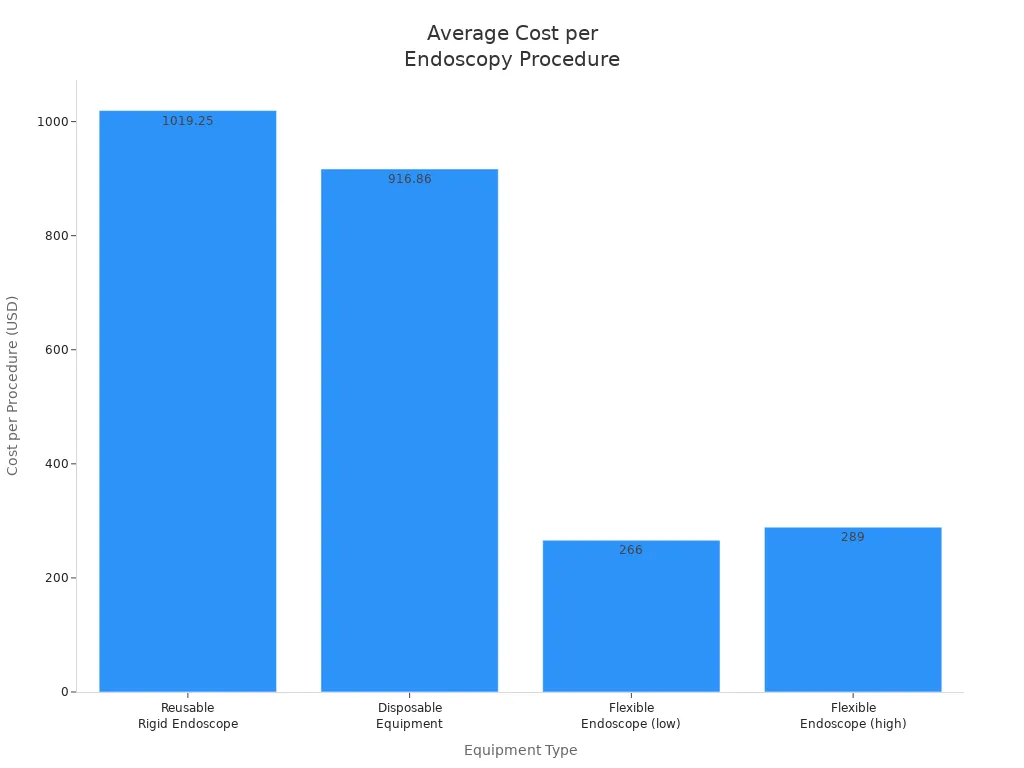
Flexible tube endoscopes continue to expand their role in medical diagnostics and therapy. Their ability to navigate complex anatomical pathways, combined with improved patient comfort, makes them a vital tool in modern medicine. Rigid endoscopes remain the standard for procedures that require high-resolution imaging and precise control.
Proper cleaning and sterilization of an endoscope protect patients and support medical safety. International guidelines, such as ANSI/AAMI ST91 and AORN, outline strict steps for both rigid and flexible endoscopes. Each type has unique requirements because of differences in design and use.
For rigid endoscopes, the cleaning process includes:
Immediate point-of-use treatment after procedures to prevent organic material from drying.
Manual cleaning by trained staff, which involves wiping, leak testing, brushing all channels with detergent, and thorough rinsing.
High-level disinfection or sterilization, either manually or with automated systems, following the manufacturer's instructions.
Careful drying using compressed air and, when allowed, alcohol flushing to prevent biofilm.
Storage in special cabinets that keep the endoscope dry and free from contamination.
Documentation of each step for quality assurance.
Tip: Drying and proper storage are critical. Moisture can lead to biofilm, which increases infection risk.
Flexible endoscope cleaning is more complex. Flexible tube endoscopes have intricate internal channels and bending parts. These features make them harder to clean and more likely to harbor bacteria if not processed correctly. Staff must use special brushes and solutions to reach every part. High-level disinfection or sterilization is essential, especially for high-risk devices like duodenoscopes.
Aspect | Rigid Endoscopes | Flexible Endoscopes |
|---|---|---|
Structure | Simple, straight metal tube without complex channels | Complex internal channels (air/water, suction, bending mechanisms) |
Cleaning Complexity | Less intricate; standard disinfection and sterilization methods, manual or automated | Requires delicate, thorough manual cleaning with specific brushes and solutions targeting internal channels |
Risk of Biofilm/Bacterial Contamination | Lower risk due to simpler design | Higher risk; prone to biofilm formation and bacterial contamination |
Sterilization Requirements | Standard sterilization or disinfection | Requires validated sterilization processes; high-level disinfection or sterilization recommended, especially for high-risk devices |
Maintenance Importance | Proper handling and adherence to manufacturer instructions critical | More rigorous cleaning protocols and strict maintenance essential to ensure patient safety and device longevity |
Sterilization methods vary. Ethylene oxide gas works for some endoscopes but takes a long time. Vaporized hydrogen peroxide suits many surgical endoscopes and bronchoscopes. Liquid chemical sterilization, using peracetic acid, is common for flexible tube endoscopes because it penetrates complex lumens quickly.
Medical teams must always follow the manufacturer's instructions for each endoscope model. Consistent documentation and quality checks help maintain high standards and protect patient health.
Rigid endoscopes offer several advantages in endoscopic procedures. They deliver high-definition images with superior clarity and brightness. Advanced rod-lens optical systems and high-definition cameras help surgeons achieve precise visualization during surgical procedures. The rigid design provides increased stability and control, which is critical for delicate medical operations such as neurosurgery and laparoscopy. Surgeons can select from various viewing angles and diameters, allowing customized visualization for different surgical operations. Durability enables rigid endoscopes to withstand repeated sterilization, supporting consistent image quality and patient safety.
Rigid endoscopes simplify complex surgical procedures and improve accuracy in challenging cases.
However, rigid endoscopy has notable disadvantages. The procedure often requires general anesthesia, which increases risk and complexity. Patients may experience mechanical complications, including trauma to teeth, throat, and vocal cords, as well as pneumothorax and laryngospasms. Systemic complications such as vasovagal syncope, hypoxemia, and arrhythmias can occur. Rigid endoscopy is more invasive and traumatic compared to flexible endoscopy, leading to higher discomfort and longer recovery times. Operator experience and institutional factors influence complication rates, which range from 5% to 13%. Major complications include esophageal perforation, abscess, and, rarely, death.
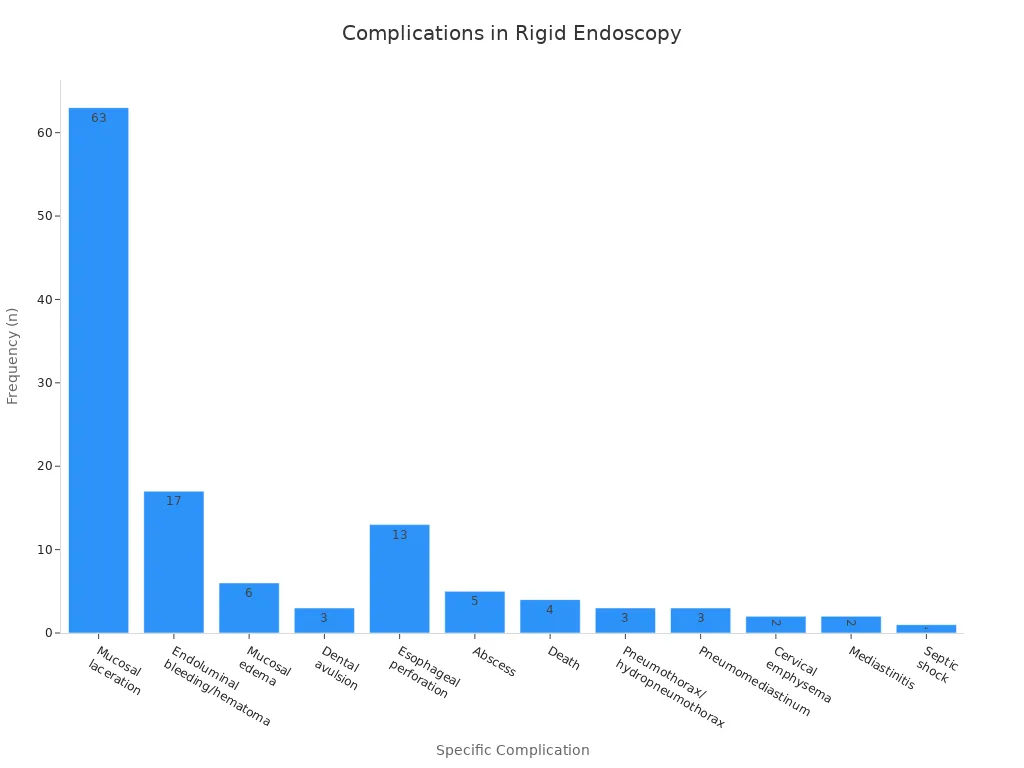
Flexible endoscopes provide greater comfort for patients during endoscopic procedures. Their flexibility allows easy navigation through natural body pathways, reducing pain and shortening recovery time. Most flexible endoscopic procedures use local anesthesia in outpatient settings, which avoids hospitalization and lowers costs. Flexible endoscopes are less invasive and cause less post-operative pain and scarring than rigid endoscopes.
Clinical studies show that flexible endoscopy achieves similar technical success and clinical outcomes compared to rigid endoscopy. Flexible endoscopy results in fewer adverse events, most of which are mild, and significantly shorter hospital stays.
Outcome | Flexible Endoscopy (n=99) | Surgical Repair (Rigid Endoscopy & Open Surgery) (n=99) | P-value |
|---|---|---|---|
Clinical Success | 82.0% | 74.1% | 0.42 |
Technical Success | 100% | 100% | 1.00 |
Intra-operative and 30-Day AE Rate | 3.03% (all mild) | 9.09% (includes moderate and severe) | 0.13 |
Median Procedure Length (min) | 56 | 62 | 0.086 |
Median Hospital Length of Stay (days) | 0 | 2 | <0.0001 |
Flexible endoscopes have limitations. They are less durable than rigid endoscopes and require complex cleaning to prevent contamination. Flexible endoscopes may not provide the same image stability or clarity needed for some surgical procedures. Maintenance and handling demand careful training to ensure patient safety.
Rigid endoscopy uses a rigid endoscope to deliver clear, stable images and precise control, making it essential for surgeries like neurosurgery and orthopedics. Rigid endoscopes feature a durable, straight design that supports easy cleaning and repair. Flexible endoscopes provide high maneuverability for curved pathways, ideal for digestive and respiratory procedures. Clinicians select rigid endoscopes for procedures needing accuracy and stability. The market for rigid endoscopes continues to grow, driven by new technology and demand for minimally invasive care. Patients should consult healthcare professionals to choose the best endoscopic approach for their needs.
A rigid endoscope is a straight, sturdy medical device. Doctors use rigid endoscopes to see inside the body and perform surgery. The rigid endoscope provides clear images and precise control during procedures.
A rigid endoscope has a solid, inflexible tube. Flexible endoscopes bend and twist to reach curved areas. Rigid endoscopes work best in straight or open spaces, while flexible endoscopes suit tubular organs.
Doctors use rigid endoscopes in surgeries for joints, abdomen, nose, and brain. Rigid endoscopes help remove tumors, repair tissues, and retrieve foreign objects. Veterinarians also use rigid endoscopes for animal procedures.
Medical teams clean rigid endoscopes by wiping, brushing, and sterilizing the metal tube. The rigid endoscope’s simple design makes cleaning easier than flexible models. Proper cleaning prevents infection and keeps the rigid endoscope safe for reuse.
Doctors consider rigid endoscopes safe when used correctly. The rigid endoscope’s strong design reduces risk during surgery. Some patients may feel discomfort, but doctors monitor safety and use anesthesia to protect patients.


