
Views: 0 Author: Site Editor Publish Time: 2025-10-27 Origin: Site


In the realm of industrial applications, precision, reliability, and accuracy are paramount. Every sector, from semiconductor manufacturing to optical testing, demands optical systems that can deliver clear, precise results without compromising efficiency. One optical component that has been gaining considerable attention in recent years is the RGB Prism. By splitting light into its primary colors—red, green, and blue—RGB Prisms offer unparalleled control over light, which has led to their adoption across a variety of industrial sectors.
This article explores the growing role of RGB Prisms in industrial applications. We will delve into the specific industries where these prisms are most effective, the advantages they offer over traditional optical systems, and how they are revolutionizing industrial processes. Through this exploration, we will uncover how RGB Prisms provide a clear advantage in precision manufacturing, optical testing, and laser systems, and why they are becoming a key component in industrial optics.
To fully understand the role of RGB Prisms in industrial applications, it's essential to first grasp what they are and how they function.
RGB Prisms are optical elements designed to separate light into three primary color channels: red, green, and blue. This is achieved through the process of dispersion, where light is refracted at different angles based on its wavelength. Shorter wavelengths (like blue light) are refracted more than longer wavelengths (like red light), allowing the RGB Prism to break down light into its component colors.
This ability to split light with high precision allows for more controlled and accurate optical systems. RGB Prisms are used in a variety of industrial processes, from optical testing and quality control to laser systems and precision manufacturing.
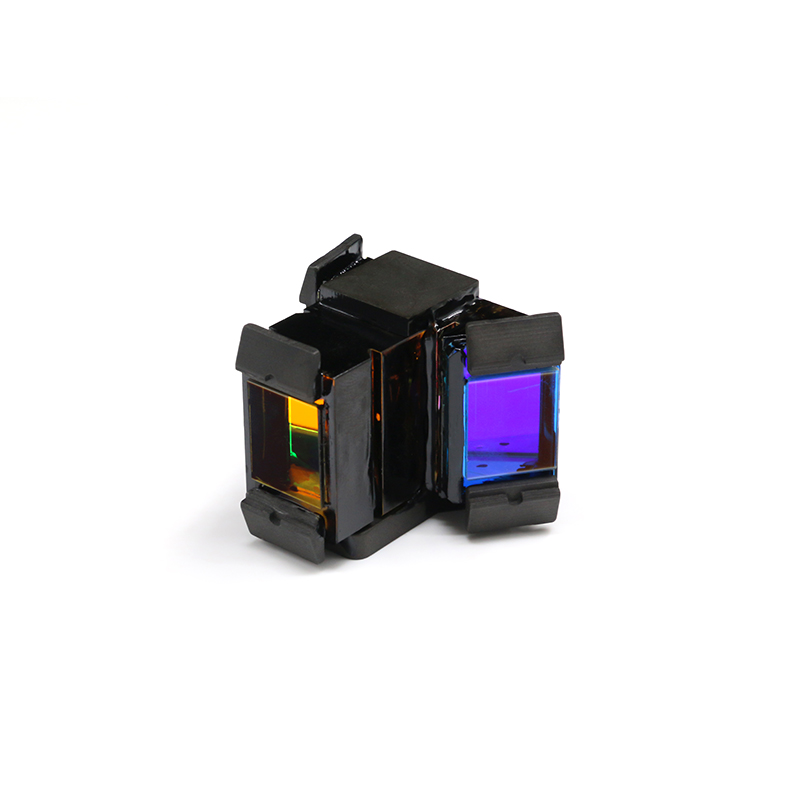
When white light enters the RGB Prism, it is refracted based on its different wavelengths. The longer wavelengths (red) bend less, while shorter wavelengths (blue) bend more. As a result, the light is separated into three distinct color channels. These prisms are often made from high-quality optical materials like fused silica or glass, which allow for superior clarity and minimal distortion.
The primary benefit of RGB Prisms is their ability to separate light with high accuracy and precision, which is essential in industries where even small differences in light can affect the outcome of a process. For example, in semiconductor manufacturing, precise control over light is necessary for the production of high-quality components.
Precision is a key factor in industries like semiconductor manufacturing, optical component fabrication, and aerospace. In these sectors, the smallest inaccuracies can lead to significant defects, which can compromise the entire manufacturing process. RGB Prisms are used in these industries to enhance optical testing and quality control.
In semiconductor manufacturing, for example, RGB Prisms are used in photolithography processes to ensure that light is accurately focused and split to create the precise patterns needed for integrated circuits (ICs). The ability to control light down to the individual color channels ensures that the process remains highly accurate, even at the microscopic scale.
| Industry | Application | Benefit of RGB Prisms |
|---|---|---|
| Semiconductor | Photolithography | Precise light control for accurate IC production |
| Aerospace | Optical systems | Enhanced image clarity and measurement accuracy |
| Automotive | Quality control and inspection | Improved precision in visual inspection and testing |
RGB Prisms also play an essential role in optical testing and calibration. In industries like telecommunications, automotive, and electronics, RGB Prisms are used to test and calibrate optical systems, ensuring that they meet the required standards for performance.
By separating light into distinct color channels, RGB Prisms allow engineers to test optical components with greater precision. This is particularly important in industries where the performance of optical systems directly impacts product functionality and safety.
For example, in telecommunications, where fiber-optic systems are essential, RGB Prisms help calibrate light transmission systems to ensure that signals are transmitted without interference, ensuring high-quality communication.
In laser systems, the ability to control the wavelength of light is critical, especially in applications like laser cutting, laser engraving, and medical laser treatments. RGB Prisms offer precise control over light wavelengths, which can be adjusted to target specific materials or tissues. This fine-tuned control enables laser systems to operate with greater efficiency and accuracy.
For instance, in laser cutting, RGB Prisms can separate light into specific wavelengths that are optimized for cutting different materials. This allows the laser to cut with higher precision, reducing the risk of errors and improving the quality of the final product.
The most significant advantage of RGB Prisms over traditional optical systems is their ability to provide superior precision. By separating light into its individual color components, RGB Prisms eliminate issues like chromatic aberration, which can distort the image when using traditional lenses and filters.
In industries like semiconductor manufacturing, even the smallest error in light manipulation can lead to defects in the final product. RGB Prisms ensure that light is precisely controlled, leading to more accurate measurements and higher-quality products.
In many industrial applications, clear and sharp images are essential for accurate analysis and decision-making. RGB Prisms enhance image clarity by separating light into distinct color channels, reducing distortion and enhancing contrast. This is particularly useful in industries like optical testing and aerospace, where high-resolution images are necessary for precise measurements.
The ability of RGB Prisms to separate light into three components allows for more efficient optical systems. For example, in photolithography processes, RGB Prisms enable precise control over light patterns, which leads to higher throughput and faster production times. In industries like automotive manufacturing, RGB Prisms help improve quality control systems, allowing for quicker identification of defects and faster decision-making.
Traditional optical systems, such as lenses and filters, are commonly used to manipulate light in industrial applications. However, these systems often lack the fine control over light wavelengths that RGB Prisms provide. Lenses typically focus light but do not separate it into distinct color channels, which can lead to issues like chromatic aberration and reduced image clarity.
In contrast, RGB Prisms offer precise control over light dispersion, splitting light into its primary color channels. This results in clearer images and more accurate measurements, which are crucial in precision manufacturing and optical testing.
| Feature | RGB Prisms | Traditional Optics |
|---|---|---|
| Light Separation | Exact separation of red, green, and blue | No separation; may cause chromatic aberration |
| Precision | High precision in light manipulation | Lower precision in light control |
| Image Clarity | High contrast and clarity | Reduced contrast, potential distortion |
| Industrial Application | Suitable for high-precision industries | Limited in precision applications |
RGB Prisms are typically made from high-quality materials like fused silica, which ensures their durability and reliability in industrial environments. These prisms can withstand high temperatures, pressure, and other harsh conditions, making them ideal for use in industries like aerospace and automotive manufacturing.
Traditional optical systems, such as filters and lenses, may not be as durable, especially in extreme environments. This makes RGB Prisms a more reliable choice for industries that require consistent performance over time.
RGB Prisms are used in various industrial applications, including precision manufacturing, optical testing, and laser systems. They are primarily used to separate light into its red, green, and blue components, allowing for more precise control over light and improved image clarity.
In precision manufacturing, RGB Prisms provide superior light control, which ensures accurate measurements and high-quality product outputs. By separating light into distinct color channels, these prisms eliminate issues like chromatic aberration, leading to clearer, more accurate results.
Yes, RGB Prisms offer significant advantages over traditional optical systems, such as lenses and filters. They provide higher precision, better image clarity, and greater control over light, making them ideal for high-precision industrial applications.
Yes, RGB Prisms are widely used in laser systems to control the wavelength of light. This allows lasers to target specific materials or tissues with greater accuracy, improving the efficiency and precision of processes like laser cutting and medical laser treatments.
RGB Prisms are revolutionizing industrial optics by providing superior precision, clarity, and control over light. In industries like semiconductor manufacturing, optical testing, and laser systems, RGB Prisms offer distinct advantages over traditional optical components. Their ability to separate light into its red, green, and blue components ensures that light is manipulated with high accuracy, resulting in better-quality products and more efficient processes. As industries continue to demand higher precision and better performance, RGB Prisms will undoubtedly play an increasingly important role in shaping the future of industrial optics.


