
Views: 0 Author: Site Editor Publish Time: 2025-10-23 Origin: Site


In recent years, the integration of RGB Prisms in medical applications has revolutionized the way healthcare professionals diagnose and treat patients. These optical components offer unparalleled precision and reliability, particularly in areas that demand highly accurate imaging, such as endoscopy, laser treatment, and diagnostic systems. By breaking down light into its primary colors—red, green, and blue—RGB Prisms enhance the clarity and contrast of medical images, ensuring more accurate diagnoses and better treatment outcomes. This article explores how RGB Prisms are enhancing precision in medical applications and their growing importance in modern healthcare technology.
RGB Prisms are optical elements that separate light into its three fundamental color components: red, green, and blue. Understanding the principles behind their operation is key to appreciating their role in medical applications.
When light passes through a prism, it is refracted (bent) at different angles depending on the wavelength of the light. This phenomenon is called dispersion, and it occurs because different colors of light travel at different speeds through the material. RGB Prisms take advantage of this property to split white light into its red, green, and blue components. By precisely controlling the dispersion, RGB Prisms can produce more accurate and higher-contrast images, which is essential for medical imaging and diagnostics.
In the context of medical applications, RGB Prisms allow for the precise manipulation of light, which enhances image quality and improves the accuracy of diagnostic results. By splitting light into its constituent colors, these prisms help reduce image distortion and improve the resolution of imaging systems.
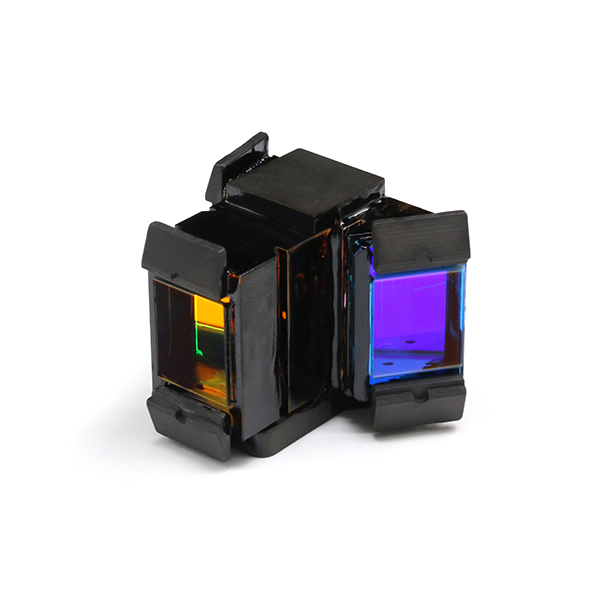
One of the most significant medical applications of RGB Prisms is in endoscopy. Endoscopic procedures involve inserting a small camera (endoscope) into a patient's body to examine internal organs. RGB Prisms are used in the endoscope’s optical system to enhance the visibility of tissues and organs. By separating light into distinct color channels, RGB Prisms increase the contrast of the images, making it easier for doctors to identify abnormalities such as tumors, lesions, or infections.
Endoscopic images captured using RGB Prisms are clearer, sharper, and more detailed. The separation of light into red, green, and blue components allows the medical imaging system to highlight specific features of tissues, making it easier for doctors to identify subtle changes that may not be visible with traditional imaging systems.
Beyond endoscopy, RGB Prisms are also integral in a variety of other diagnostic tools, including microscopes, CT scans, and MRI machines. These devices require high-quality optical components to provide accurate images for diagnosis. The use of RGB Prisms enhances image quality, enabling doctors to see finer details and make better-informed decisions.
RGB Prisms are also used in medical laser treatment systems, where precise control over light wavelengths is crucial. For example, in dermatology and ophthalmology, lasers are often used to target specific tissues for treatment. RGB Prisms help control the laser light's wavelength by separating it into distinct color components, ensuring that the laser targets only the desired area without affecting surrounding tissues.
By fine-tuning the light wavelength with RGB Prisms, medical lasers can be more effective in treating various conditions, such as skin disorders, eye surgeries, and even cancer treatments. The ability to control the light's intensity and color allows for better treatment precision, minimizing damage to healthy tissues while maximizing therapeutic effects.
The primary advantage of RGB Prisms in medical imaging is their ability to enhance image clarity and contrast. By separating light into its red, green, and blue components, RGB Prisms reduce the overlap of wavelengths, which minimizes distortion and improves the overall quality of the image. This is especially important in medical diagnostics, where every detail of an image can be critical to making an accurate diagnosis.
The high resolution provided by RGB Prisms allows for more accurate identification of medical conditions. In imaging technologies like MRI and CT scans, enhanced resolution enables doctors to detect issues such as small tumors or early-stage infections that might be overlooked with lower-resolution images. The ability to see finer details directly impacts the effectiveness of treatment planning and outcomes.
In procedures like surgical navigation, where real-time imaging is critical, RGB Prisms help ensure that the surgeon has the clearest view possible of the patient's internal structures. By enhancing the image quality in real-time, RGB Prisms provide a more precise guide for surgical interventions, minimizing risks and improving patient safety.
During surgeries, RGB Prisms are used in intraoperative imaging systems that provide real-time feedback to the surgical team. For example, during neurosurgery, RGB Prisms enhance the clarity of brain imaging, helping surgeons navigate with greater accuracy. The ability to separate light into distinct colors allows for improved differentiation between healthy and diseased tissues, which is vital for the success of the procedure.
By improving image quality and contrast, RGB Prisms help reduce the chances of surgical errors. For example, in spinal surgeries, where precision is critical, RGB Prisms help surgeons better visualize spinal structures, leading to fewer complications and faster recovery times for patients.
RGB Prisms are ideal for medical imaging because they enhance image clarity, contrast, and resolution. By separating light into its red, green, and blue components, these prisms reduce distortion and improve the accuracy of diagnostic images, helping healthcare professionals make better-informed decisions.
Yes, RGB Prisms can be used in a variety of medical imaging systems, including endoscopes, microscopes, CT scans, MRI machines, and surgical navigation systems. They are especially useful in applications that require high precision and clarity, such as detecting tumors or guiding surgery.
In laser treatments, RGB Prisms control the light wavelength, ensuring that the laser targets specific tissues without affecting surrounding areas. This improves treatment accuracy, especially in delicate procedures like dermatology and ophthalmology.
While the initial cost of RGB Prisms may be higher compared to traditional optical components, their long-term benefits—including improved precision, clarity, and patient outcomes—make them a cost-effective choice for modern medical applications. Their durability and performance also reduce the need for frequent maintenance.
RGB Prisms have undeniably transformed medical applications, enhancing the precision, clarity, and accuracy of diagnostic imaging, laser treatments, and surgical procedures. Their ability to separate light into distinct red, green, and blue components ensures superior image quality and improved treatment outcomes. As technology continues to advance, RGB Prisms will play an increasingly critical role in shaping the future of medical optics, driving innovations in patient care and medical technology.


