
Views: 0 Author: Site Editor Publish Time: 2026-02-06 Origin: Site


Invisible to most patients yet indispensable to every medical professional, advanced optical technology silently supports nearly every stage of modern healthcare. From diagnosis to surgical intervention and long-term research, Medical Optics Uses extend far beyond what many equipment buyers or distributors initially realize. Rising EO, a high-tech optical technology enterprise with strong engineering capabilities and internationally recognized certifications, continues to develop professional medical optical solutions that help healthcare institutions and equipment manufacturers achieve dependable clarity, stable integration, and long service life. Understanding the real environments where medical optics operates allows decision-makers to better evaluate equipment value, optimize purchasing strategies, and enhance clinical performance without unnecessary trial and error.
Hospitals remain the most demanding and performance-sensitive environment for medical optical systems. Within surgical rooms, imaging clarity directly influences both physician confidence and patient safety. Surgeons depend on visual precision not only to observe tissues but also to guide surgical instruments, coordinate teamwork, and make real-time decisions. A slight visual distortion or unstable image transmission can lead to hesitation or extended operation time, which is why optical reliability is considered a foundational requirement rather than an optional upgrade.
Rising EO designs medical optical components with durability and performance stability as core priorities. Materials are selected for resistance to corrosion and sterilization chemicals, while structural engineering ensures that lenses and endoscopes maintain alignment even after repeated mechanical handling. These qualities allow hospitals to operate with confidence, reduce replacement frequency, and maintain imaging consistency across departments.
Minimally invasive surgery represents one of the clearest demonstrations of how medical optics transforms healthcare outcomes. Procedures that once required large incisions can now be performed through tiny openings, significantly reducing pain, recovery time, and hospital stays. However, this surgical advancement depends entirely on reliable optical visualization.
Endoscope lenses, rigid endoscopes, and 3D imaging systems provide surgeons with magnified, high-definition views of internal anatomical structures. Rising EO supplies precision-engineered optical components that deliver balanced brightness, accurate color representation, and minimal distortion. These characteristics allow surgeons to distinguish tissue variations and navigate complex anatomical regions more safely. Customized medical optics also ensures compatibility with diverse surgical equipment, enabling institutions to upgrade visualization performance without replacing entire systems.
Real-time imaging plays a critical role in surgical environments where immediate feedback is essential. Surgeons and assistants must receive continuous visual information without latency or signal instability. Optical couplers and imaging assemblies designed by Rising EO contribute to seamless integration between cameras, monitors, and optical devices, ensuring uninterrupted signal transmission. Stable real-time visualization not only enhances procedural safety but also improves team coordination, reducing operation duration and minimizing patient exposure to anesthesia.
Diagnostic centers and outpatient clinics rely heavily on optical technologies for examination, screening, and early detection. These facilities often handle a large volume of patients daily, making imaging efficiency and durability equally important. Optical clarity supports accurate diagnosis, while material strength ensures long-term reliability despite frequent usage.
Endoscope imaging systems and high-resolution optical lenses allow physicians to observe internal organs and tissues with enhanced visibility. Rising EO designs medical optical products that maintain brightness stability and color accuracy, enabling clinicians to detect abnormalities at early stages. Early detection significantly increases treatment success rates and reduces healthcare costs for patients and institutions alike.
Beyond disease identification, optical systems also improve patient communication. Clear imaging results help physicians explain medical conditions more effectively, strengthening patient trust and understanding. This visual transparency enhances the overall healthcare experience and reinforces the professional credibility of diagnostic institutions.
Research laboratories represent another critical domain where medical optical technologies play a foundational role. Unlike clinical environments that focus on immediate patient care, laboratories emphasize experimentation, analysis, and long-term scientific advancement. Optical instruments used in these settings must deliver extreme precision and stability because even minor visual inconsistencies can affect experimental outcomes.
Rising EO integrates advanced coating technologies and corrosion-resistant materials into its optical products, ensuring consistent performance under chemical exposure and continuous usage. Accurate visualization supports biological observation, cellular research, and equipment testing, contributing to breakthroughs in medical science and technology.
Laboratories also serve as educational centers where students and professionals refine their skills. Reliable optical systems enable accurate demonstration and observation, accelerating learning efficiency and improving training quality. By providing stable and precise optical components, Rising EO contributes indirectly to the cultivation of future healthcare professionals and researchers.
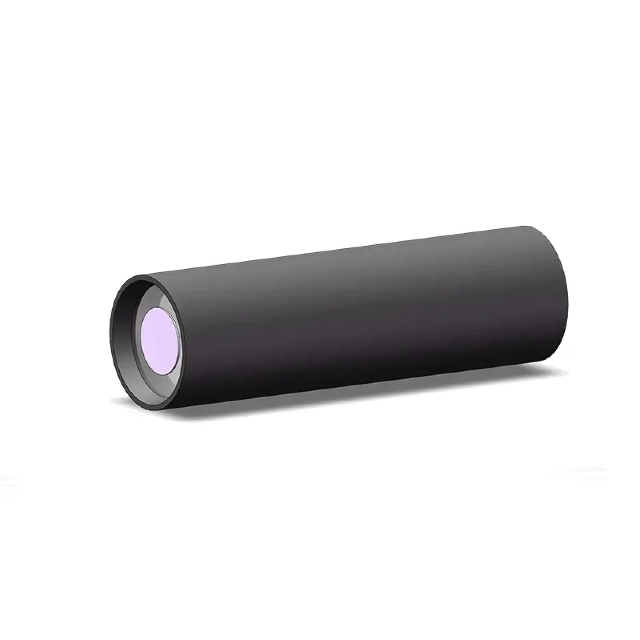
Medical device manufacturing is a less visible yet highly influential field where medical optics exerts significant impact. Equipment producers require optical components that integrate seamlessly into diagnostic tools, surgical devices, and imaging systems. Compatibility, customization, and consistency become key priorities in this environment.
Original equipment manufacturers depend on optical suppliers capable of delivering uniform quality and stable production capacity. Rising EO supports OEM partnerships by providing optical components engineered for manufacturing efficiency and compliance with international quality standards. Consistent optical quality ensures that finished medical devices meet performance expectations across global markets, strengthening brand reputation and reducing return rates.
Customization frequently becomes necessary when standard optical components cannot fully satisfy engineering requirements. Different device models require unique focal lengths, diameters, coatings, and interface designs. Rising EO specializes in tailored optical solutions that adapt to diverse equipment specifications, allowing manufacturers to optimize product functionality without redesigning entire systems. Customized medical optics extends product lifecycle, improves device competitiveness, and enhances long-term value for manufacturers.
Environment | Optical Component | Purpose | Benefit |
Hospitals | Rigid endoscopes and 3D scopes | Surgical visualization | Enhanced precision and safety |
Clinics | Endoscope lenses | Early diagnosis | Faster detection and improved patient trust |
Laboratories | Optical lens assemblies | Research observation | Accurate experimental data |
Manufacturing | Couplers and customized lenses | Equipment integration | Higher compatibility and efficiency |
Medical optical technology continues to expand as healthcare innovation accelerates. Emerging applications demonstrate that optical systems remain essential even as digital solutions evolve.
Remote healthcare services increasingly rely on stable imaging transmission. Telemedicine platforms require optical clarity that enables physicians to conduct examinations from distant locations without sacrificing diagnostic accuracy. High-quality optical components ensure that remote imaging remains dependable rather than becoming a compromised substitute.
Robotic surgery represents another rapidly growing domain. Automated surgical systems depend on precise visualization to guide mechanical movements accurately. Optical systems provide the visual foundation upon which robotic precision is built. Rising EO continuously monitors industry trends and refines its product development strategies to align with these future demands.
Miniaturization also plays a significant role in shaping the future of medical optics. Compact optical modules enable portable diagnostic devices and handheld imaging tools that improve accessibility in remote or resource-limited areas. Intelligent imaging technologies further enhance interpretation efficiency, yet they still depend on high-quality optical hardware as their foundational input source. No matter how advanced software becomes, clear visualization begins with precise optics.
The expanding scope of medical imaging optical applications illustrates how deeply optical technology is embedded in modern healthcare systems. Rising EO, supported by advanced engineering capabilities, certified quality management systems, and a commitment to continuous innovation, delivers a comprehensive range of medical optical products designed to serve hospitals, clinics, laboratories, and equipment manufacturers alike. From endoscope imaging components to customized couplers and high-definition visualization systems, these solutions enhance clarity, compatibility, and operational reliability across diverse environments. Organizations aiming to strengthen equipment performance and long-term value can benefit from collaborating with an experienced optical technology provider. For tailored medical optical solutions that align with your application requirements and future development plans, contact us at Rising EO and discover how advanced optical technology can elevate healthcare efficiency and patient outcomes.
1. Which medical environments rely most heavily on optical systems?
Hospitals, diagnostic clinics, research laboratories, and medical device manufacturing facilities all depend on optical technologies for imaging accuracy and equipment integration.
2. Why is optical precision essential in minimally invasive surgery?
Clear visualization allows surgeons to operate through small incisions while maintaining accuracy, reducing risk, and shortening recovery time.
3. Can medical optical components be customized for specific equipment models?
Yes, customization allows adjustments in focal length, interface design, and coatings to ensure optimal compatibility and performance.
4. How will medical optics influence future healthcare technologies?
Optical systems will continue to support telemedicine, robotic surgery, and portable diagnostic devices by providing the stable visual foundation required for accurate imaging.


