
Views: 0 Author: Site Editor Publish Time: 2026-06-26 Origin: Site


Optical accuracy serves as the undeniable backbone of modern automated machine vision, rigorous quality control, and high-tolerance metrology. Today’s fast-paced manufacturing environments rely heavily on these imaging systems. They inspect delicate components at staggering speeds. However, engineers frequently encounter a glaring problem. Standard optical setups naturally introduce perspective errors, commonly known as parallax. They also suffer from unavoidable magnification shifts whenever parts vibrate on a conveyor or vary in depth. This fundamental flaw heavily compromises measurement repeatability. It eventually causes false rejections or undetected defects.
Standard optics view objects using an angular field of view, mimicking the human eye. Conversely, advanced designs like Telecentric Lenses maintain a strictly parallel field of view. This completely eliminates magnification changes as objects move. You can thus secure absolute measurement accuracy. Let us explore the core differences, implementation realities, and selection frameworks. You will learn exactly when and how to deploy these precision instruments.
Perspective Shift: Standard lenses exhibit parallax (closer objects appear larger); telecentric lenses maintain constant magnification regardless of object distance within the depth of field.
Measurement Accuracy: A precision measurement lens (telecentric) is required for high-tolerance metrology, edge detection, and gauging thick or stepped 3D parts.
Physical Constraints: Telecentric lenses must be at least as large as the required Field of View (FOV), requiring more physical space and higher upfront investment than standard entocentric lenses.
Illumination Dependency: Maximizing the performance of a telecentric system typically requires matching collimated (telecentric) lighting.
Most cameras use standard entocentric lenses. These optical setups capture images using diverging light rays. They function exactly like the human eye. They possess an angular field of view. This geometry dictates a simple physical rule. When an object moves closer to the lens, it occupies more pixels on the sensor. Therefore, it appears significantly larger. Conversely, objects further away shrink in the field of view. Magnification constantly changes based on the precise distance between the target and the camera.
This angular viewing method introduces significant metrology risks. Engineers call this "parallax error." When you inspect a three-dimensional object using a standard lens, the camera sees multiple planes simultaneously. You do not just see the top flat profile. You also see the vertical sides of the object. This overlapping geometry confuses edge detection algorithms. For example, if you measure a tall cylinder, the software might register the outer side walls as the true edge. This leads to wildly inaccurate dimensional inspections. It becomes impossible to gauge precise tolerances.
Optical distortion directly threatens manufacturing profitability. Parallax generates unreliable gauging data. Systems struggle to determine true component dimensions. This uncertainty triggers false rejects. Perfect parts end up in the scrap bin. Alternatively, bad parts pass through quality gates. Both scenarios demand costly manual reinspection. They severely reduce overall system throughput. High-precision manufacturing relies entirely on repeatable, absolute data. Without it, the automated process breaks down.
The primary distinction lies in how these lenses manage light paths. Standard lenses feature converging or diverging chief ray angles. Light enters the optical system at varying slopes. Telecentric systems use a radically different approach. They rely on parallel chief rays. The optical elements force the incoming light to travel parallel to the optical axis. This structural difference fundamentally changes how the camera perceives physical space.
Parallel light paths provide one massive advantage. They decouple magnification from working distance. If your target part vibrates on an assembly line, it shifts along the Z-axis. A standard lens will instantly register a size change. A telecentric setup entirely ignores this movement. The part's measured size remains absolutely identical, whether it sits at the closest or furthest edge of the depth of field. You secure perfectly stable, repeatable measurements.
General imaging lenses suffer from radial distortion. You often see this as barrel or pincushion distortion. Straight lines curve near the image edges. Standard lenses typically exhibit distortion rates between one and three percent. Telecentric optical designs dramatically minimize this flaw. They deliver ultra-low distortion characteristics, frequently dropping below 0.1 percent. This flat mapping ensures that a millimeter measured in the center perfectly matches a millimeter measured at the image corner.
Manufacturers divide these lenses into two primary categories. Object-side telecentric setups maintain parallel rays exclusively on the side facing the target. They offer excellent dimensional stability. However, sensor positioning slightly affects image size. Bi-telecentric setups take accuracy further. They maintain parallel rays on both the object side and the sensor side. They deliver maximum accuracy. They tolerate slight misalignments of the camera sensor without altering the recorded measurements.
Optical Characteristic | Standard Lenses | Telecentric Lenses |
|---|---|---|
Field of View | Angular (diverging rays) | Parallel (zero angle) |
Magnification | Changes with distance | Constant within Depth of Field |
Parallax Error | High (sees object sides) | Eliminated (sees only top profile) |
Distortion Rate | 1.0% to 3.0%+ | < 0.1% typical |
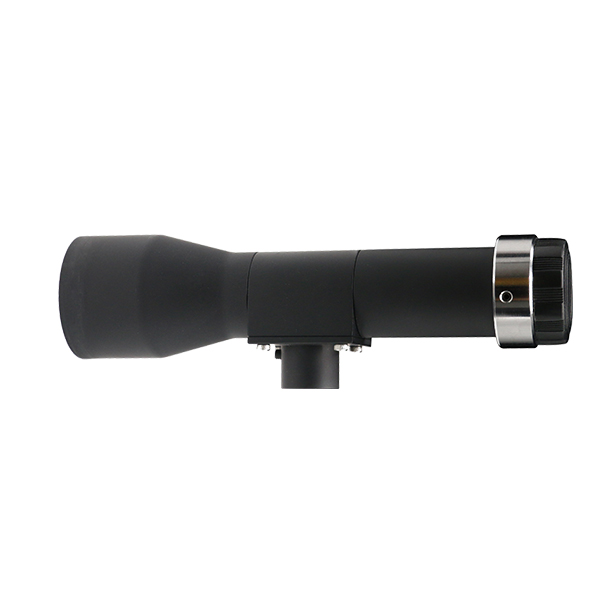
Complex geometries instantly justify advanced optics. If you must measure stepped parts or multi-level components, parallax will ruin your data. A Precision Measurement Lens eliminates this issue. It peers straight down into deep holes without viewing the inner walls. It views cylindrical objects as perfect flat rectangles. You accurately measure the true diameter without wall interference. Standard lenses simply cannot perform this task without complex mechanical workarounds.
Speed often introduces instability. Automated factories feed parts via rapid, high-speed conveyors. These moving belts naturally introduce slight vertical flutter. Components bounce subtly along the Z-axis. Constant magnification becomes an absolute necessity here. If you use standard optics, software must constantly recalculate part sizes based on estimated height. A telecentric setup bypasses this math. It captures the exact dimensions instantly, regardless of minor vertical vibrations.
Modern microchips demand extreme precision. Semiconductor applications require micrometer-level defect detection. Even sub-pixel variations cause system failures. You need crisp edge contrast across the entire wafer surface. Software calibration workarounds fail at this microscopic scale. By using specialized optical hardware, you guarantee exact physical measurements. Engineers rely entirely on zero-distortion optics to inspect delicate bond wires, tiny solder bumps, and intricate circuit traces.
Advanced optics require a higher initial budget. However, you can easily justify the premium cost. Focus on the direct impact on production yield. By eliminating complex software-side perspective correction, you reduce processing times. You decrease the computing power needed per inspection. More importantly, you eliminate false rejects. A small improvement in manufacturing yield quickly covers the initial hardware investment. Hardware precision always outperforms software estimation.
Zero perspective error: Perfect for measuring deep bores and threads.
Vibration tolerance: Ideal for conveyor belt inspections where part height fluctuates.
Edge clarity: Essential for sub-pixel measurements in electronics.
Software simplification: Removes the need for constant algorithmic recalibration.
Physics dictates harsh rules for parallel optics. Because the light rays cannot diverge, the lens must physically cover the entire target. This introduces a major physical limitation. The front optical element must be larger than the object you measure. If you inspect a 100mm component, you need a lens with a diameter exceeding 100mm. You cannot use a tiny camera to inspect a massive car door using this technology.
These massive glass elements add significant bulk. They dramatically increase system weight. You must carefully plan structural requirements. If you mount these on robotic arms, you must calculate payload limits. Automated optical inspection (AOI) machines require extreme mounting rigidity. Heavy lenses are prone to micro-vibrations if inadequately supported. You must over-engineer the camera brackets to prevent physical sagging and ensure long-term optical alignment.
Optical performance heavily relies on proper illumination. Standard diffuse lighting often fails to extract the full potential of parallel optics. Diffuse light scatters randomly. It creates soft edges. To maximize performance, outline the object using a telecentric backlight. This collimated lighting sends parallel rays straight into the lens. This specific pairing generates incredibly crisp edge silhouettes. It ensures your software detects sharp, unmistakable boundaries.
Standard variable-focus lenses offer high flexibility. You twist a ring to change the focus plane. Parallel optic setups lack this freedom. Manufacturers optimize them for specific, fixed working distances. You must position the camera at an exact distance from the target. Furthermore, they feature very narrow depth-of-field ranges. If you change your product line, you might have to physically rebuild the camera mount to achieve the required working distance.
Measure your maximum part size to determine the minimum required front element diameter.
Verify the maximum payload capacity of your robotic arm or inspection gantry.
Match the specific working distance requirement with your machine's physical layout.
Source a collimated backlight that perfectly matches the lens diameter.
Start by evaluating your actual inspection needs. Does your application truly require sub-pixel accuracy? If you manufacture medical devices or aerospace components, the answer is yes. You should immediately shortlist telecentric setups. Conversely, consider simpler tasks. If you just need basic presence/absence detection, standard optics easily suffice. Do not over-engineer a simple barcode reading station. Match the hardware complexity to your absolute tolerance requirements.
Always measure your machine environment before buying hardware. Verify that the inspection station contains sufficient vertical and horizontal clearance. You need room to house the large optical barrel. You also need space beneath the part for the corresponding backlight. Tight enclosures often restrict hardware choices. Map the entire physical envelope in your CAD software. Ensure the chosen optical assembly fits without interfering with moving robot arms or safety guards.
Lenses only project light. Sensors capture it. You must carefully match these two components. Ensure your chosen optic supports the format size of your industrial camera. If the lens circle is too small, you will experience severe vignetting. The corners of your image will turn black. Additionally, verify the pixel pitch. High-resolution sensors demand superior optical resolving power. A mismatched setup wastes the potential of expensive camera sensors.
Never buy precision optics based purely on spec sheets. Always recommend conducting a proof-of-concept (PoC) optical test. Use your specific target part for this evaluation. Set up the exact lighting and working distance. Quantify the edge contrast using your inspection software. Verify the measurement repeatability across multiple test runs. A rigorous PoC testing phase exposes hidden integration challenges before procurement.
Lens Selection Decision Chart | ||
Application Goal | Recommended Lens Type | Primary Reason |
|---|---|---|
Presence / Absence Detection | Standard Lens | High flexibility, compact size, sufficient accuracy. |
Barcode / OCR Reading | Standard Lens | Focuses on contrast patterns rather than absolute dimensions. |
High-Tolerance Metrology | Telecentric Lens | Zero perspective error, constant magnification. |
Deep Hole Inspection | Telecentric Lens | Parallel rays penetrate without viewing side walls. |
Standard optics serve as highly versatile tools for general imaging. They handle packaging verification, presence/absence detection, and basic alignment tasks flawlessly. However, telecentric systems operate in a different tier. They are specialized instruments built strictly for zero-distortion metrology. When parallax errors threaten your manufacturing accuracy, parallel optics provide the definitive mechanical solution.
Optical hardware dictates the absolute limit of your software capabilities. Investing in the correct lens architecture upfront saves thousands of engineering hours. It prevents endless algorithmic tweaking downstream. You cannot fix bad optical data with software math.
Evaluate your true tolerance needs before specifying hardware.
Account for the physical size and weight constraints early in the design phase.
Always pair precision optics with appropriate collimated backlighting.
Conduct physical PoC testing to validate measurement repeatability.
Do not let parallax compromise your quality control. Encourage your engineering teams to consult an optical expert. Request a comprehensive lens evaluation based on your specific field of view and accuracy requirements today.
A: Software can easily correct simple radial distortion like barrel or pincushion effects. However, software cannot correct true Z-axis parallax. When an object moves closer or farther, its apparent size changes. Algorithms cannot accurately guess the exact height of every surface pixel to reconstruct true dimensions. For absolute accuracy on 3D objects, physical optical correction is mandatory.
A: Object-side models feature parallel light rays only on the side facing the target part. They stabilize object measurements well. Bi-telecentric designs maintain parallel rays on both the target side and the camera sensor side. This dual-parallel structure maximizes measurement accuracy and improves depth of field, rendering the system immune to slight camera sensor misalignments.
A: The size directly stems from basic physics. Because the light paths must remain strictly parallel, they cannot fan out to view a large area from a small point. The front optical element must therefore physically exceed the entire field of view. Inspecting a large object requires a proportionately larger and heavier glass element.
A: Yes, they have a defined depth of field. Within this specific vertical range, magnification remains perfectly constant. However, they are still bound by optical focus. If the object moves too far outside the specified depth of field, the image sharpness will degrade. The edges will blur, eventually causing edge detection failures.


